Johnny Depp’s ‘Ebenezer’ return divides fans as trailer’s ‘Think Again’ message fuels debate
A new trailer presenting Johnny Depp as Ebenezer Scrooge has prompted discussion about the film’s marketing, its revisionist tone and the meaning behind the phrase “Think Again.”
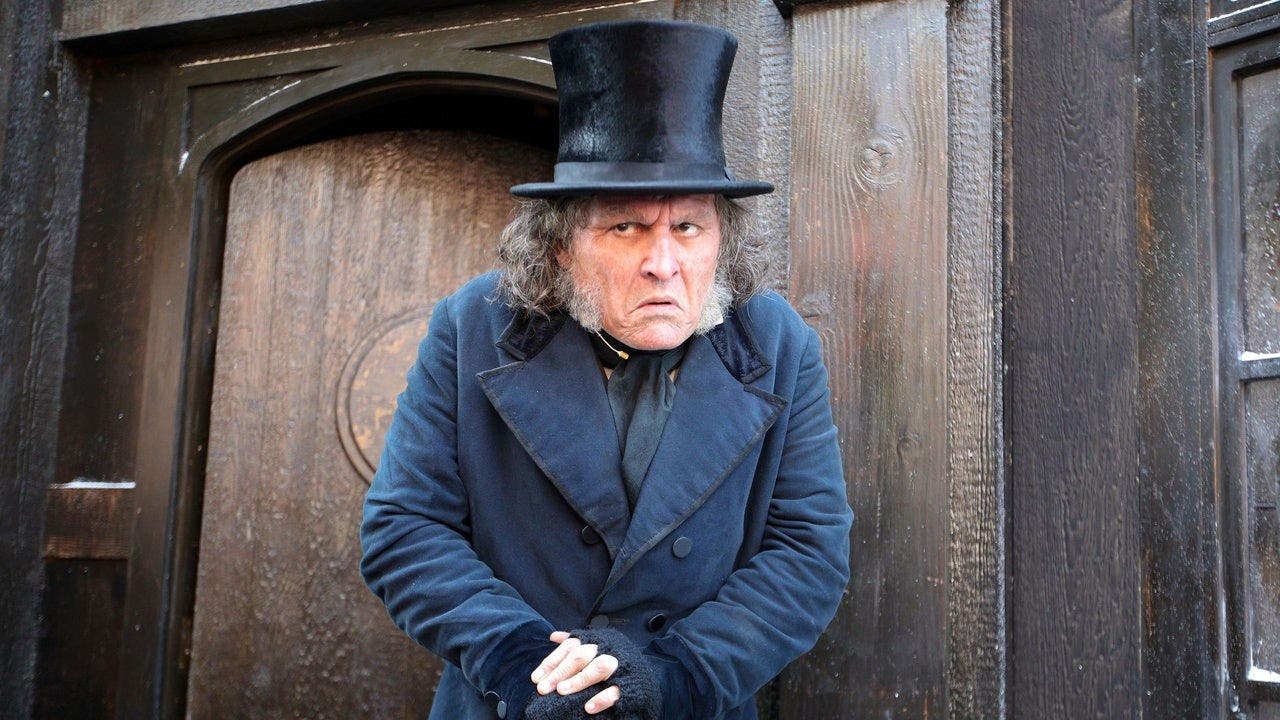
Johnny Depp’s latest screen return is already provoking strong reactions. A new trailer for “Ebenezer”, which presents the actor as Charles Dickens’ famously miserly Ebenezer Scrooge, has divided viewers before the film’s release, with much of the discussion focused not only on Depp’s transformation but also on the trailer’s pointed “Think Again” tagline.
The promotional material appears designed to signal that this will not be a straightforward retelling of Scrooge’s familiar story. Rather than simply presenting another version of the traditional Christmas tale, the campaign invites audiences to reconsider what they believe they know about the character. For some viewers, that approach makes the project feel fresh and ambitious. For others, it raises questions about whether the marketing is trying to revise a story whose central themes are already well established.
That tension has placed Depp’s performance at the center of the conversation. The actor is recognizable worldwide, yet the trailer emphasizes his transformation into Scrooge, creating a visual distance between the performer and the character. The contrast has encouraged fans to discuss whether the role represents a meaningful new direction for Depp or another attempt to build a major event around his return.

The debate is not limited to the costume or makeup shown in the trailer. Much of it concerns the way “Ebenezer” is being introduced. The phrase “Think Again” is brief, but it carries a clear message: viewers should approach this version with expectations that may need to be adjusted. That promise can be an effective way to attract attention, particularly for a story that has been adapted many times. It can also invite skepticism when the trailer does not fully explain what is being changed or why.
Scrooge is one of the most recognizable figures in English-language literature. Since Dickens’ “A Christmas Carol” entered popular culture, the character has appeared in countless stage productions, films, television specials and reinterpretations. Audiences generally understand the broad outline of his identity: he begins as a hardened, selfish man and becomes associated with moral awakening, generosity and the possibility of personal change.
Because the character is so familiar, any new version faces a difficult balancing act. It must preserve enough of the original identity to remain recognizable while offering a reason for audiences to watch yet another adaptation. The “Think Again” campaign appears to address that challenge directly. It suggests that “Ebenezer” wants to move beyond a routine recreation and encourage a different reading of the character.


Supporters of the trailer’s approach may see that as a welcome sign of creativity. A well-known story can benefit from a new perspective, especially when its central character has become so firmly fixed in the public imagination. If a film merely repeats the most familiar elements without adding anything distinctive, it risks feeling unnecessary. By signaling a revisionist interpretation, the trailer presents the film as a conversation with the original rather than a simple reproduction of it.
That strategy also gives Depp an opportunity to play against the audience’s assumptions. His public image and long association with unusual or highly stylized characters make him a natural focus for a production seeking a recognizable but unconventional interpretation. The trailer’s emphasis on his appearance as Scrooge encourages viewers to look for differences in temperament, presentation and tone, even before the full story is available to them.
Other fans have responded more cautiously. For those viewers, the “Think Again” language can sound less like an invitation and more like a declaration that the traditional understanding of Scrooge is somehow inadequate. The reaction reflects a broader concern about revisionist marketing: when a familiar story is advertised as a radical departure, audiences may wonder whether the changes serve the material or simply create publicity.


That question is especially relevant for “A Christmas Carol,” a story whose appeal rests on a clear moral transformation. The character’s journey has endured because its basic message is accessible. It presents the idea that a person who has become isolated and cruel can still choose to change. A new interpretation can explore that journey in a different way, but it must still persuade viewers that the emotional core remains intact.
The trailer has therefore created two competing expectations. One group may approach “Ebenezer” hoping to see a bold reinvention that challenges the usual image of Scrooge. Another may want a version that honors the established character without treating the original concept as something that needs to be corrected. The same promotional phrase can appeal to the first group while frustrating the second.
Depp’s involvement adds another layer to the discussion. His return is itself a significant part of the project’s public identity, and the trailer’s release has drawn attention to the actor as much as to the character. For fans, the film may represent an opportunity to see Depp take on a major role after a period in which his career has attracted intense public interest. For others, the focus on his comeback can overshadow the story and make the production feel like an event built around celebrity as much as performance.


That does not necessarily determine the quality of the film. A performer’s public profile can generate early attention, but the lasting response will depend on how convincingly the finished production presents its interpretation. The trailer can establish an idea, yet it cannot settle the larger questions about tone, storytelling or character development. Those judgments will require audiences to see the complete work.
For now, the trailer has succeeded in making “Ebenezer” difficult to ignore. Instead of presenting a quiet announcement, its campaign has encouraged viewers to debate the project’s intentions. The choice of “Think Again” is particularly effective in that respect. It is short, memorable and open to interpretation. It can be read as a promise of surprise, a challenge to convention or an attempt to defend a familiar story before viewers have had the chance to form their own opinion.
The wording also reflects a common feature of contemporary entertainment marketing. When a production is based on an established character, promotional campaigns often need to explain why this version deserves space alongside earlier adaptations. The easiest way to do that is to emphasize difference. “Ebenezer” appears to be using that approach by placing its departure from expectation at the center of the trailer.

For general audiences, the key issue may be whether that difference feels purposeful. A new interpretation does not automatically become more interesting simply because it is more unusual. Viewers will want to understand what the film is trying to say about Scrooge and why its version demands a fresh look. If the changes deepen the character, they may help the film stand apart. If they exist mainly to make the familiar seem unfamiliar, the campaign could leave audiences unconvinced.
The debate also demonstrates how much meaning can be attached to a trailer that offers only a glimpse of a larger project. Viewers are asked to interpret the actor’s appearance, the selected images and the wording of the campaign without having the full narrative. That encourages speculation, but it also means that early reactions may be shaped more by expectation than by the film itself.
Some fans will likely remain interested precisely because the trailer does not present a predictable version of Scrooge. The possibility of a different tone or a revised understanding of the character can be attractive to audiences who have encountered the traditional story many times. Others may wait for more information before deciding whether the production’s new direction is genuinely compelling.

The divide is not unusual for a beloved literary figure. Familiar characters come with built-in expectations, and those expectations can be powerful enough to influence a project long before its release. A production that stays close to tradition may be criticized for offering nothing new. One that moves too far from convention may be accused of losing the qualities that made the character endure. “Ebenezer” is now facing both pressures at once.
Depp’s transformation remains an important part of that equation. Audiences are not only evaluating the idea of a revised Scrooge; they are also considering whether the actor’s presence changes the balance of the film. His casting may attract viewers who would not otherwise seek out another adaptation, while also creating heightened expectations for the performance. The more attention the trailer places on his return, the more closely the finished portrayal is likely to be examined.
At this stage, it would be premature to treat the divided response as a verdict. A provocative trailer can lead to a very different audience reaction once the complete story is available. Marketing often simplifies a project into a few images and a memorable phrase, while the finished film may offer greater nuance than the campaign initially suggests. The “Think Again” message could ultimately prove to be a useful description of the film’s ambitions, or it could remain the aspect viewers remember most clearly.


What is certain is that “Ebenezer” has positioned itself as more than a routine announcement of another Scrooge adaptation. By linking Johnny Depp’s return to a revisionist marketing campaign, the trailer has turned the character’s reinvention into the central talking point. Fans are now debating not only what Depp looks like in the role, but also what the film believes audiences have misunderstood about Ebenezer Scrooge.
That conversation gives the project an early advantage in visibility, even as it creates a demanding standard to meet. The film will have to show that its promise of a new perspective is supported by the story itself. Until then, the reaction will remain divided between curiosity and concern: curiosity about what the trailer is withholding, and concern that its challenge to tradition may be stronger than the explanation behind it.
For viewers willing to “Think Again,” the trailer offers the possibility of a distinctive interpretation led by one of cinema’s most recognizable performers. For those who prefer the familiar shape of Dickens’ redemption story, the campaign may feel like an unnecessary complication. Either way, Johnny Depp’s portrayal has made this version of Scrooge a subject of debate long before audiences have seen the full film.