Neil LaBute and Gia Crovatin Embrace Risk With Their Ten-Day Indie Thriller Murderous
Neil LaBute and Gia Crovatin discuss the creative partnership behind Murderous, a shoestring comedy thriller made in just 10 days and designed to provoke sharply divided reactions rather than leave audiences indifferent.

Neil LaBute and Gia Crovatin are taking an intentionally unconventional route with Murderous, an independent comedy thriller made under severe time and financial constraints. The project was shot in only 10 days, a production schedule that would challenge even a tightly organized film crew. For LaBute and Crovatin, however, the limitations became part of the creative process rather than a reason to make the film less ambitious.
The film brings together two kinds of partnership. LaBute and Crovatin are collaborators, and they are also real-life partners. That overlap gives the project a particularly personal foundation, while also placing their working relationship at the center of its development. Their approach reflects the practical realities of independent filmmaking: when money, time and resources are limited, a project often depends on trust between the people making it.
Although Murderous is described as a comedy thriller, its identity appears to come from the friction between those two genres. Thrillers traditionally rely on suspense, danger and uncertainty, while comedy can undercut tension or expose the absurdity within an otherwise serious situation. Combining the forms allows the filmmakers to move between unease and humor instead of settling into a single emotional register.
Advertisement



That tonal balance is also consistent with LaBute’s stated preference for films that generate a strong response. Rather than aim for universal approval, he would rather divide audiences than bore them. The comment points to a broader philosophy about the purpose of independent cinema: a film can be successful without making every viewer comfortable, provided it creates a reaction and gives people something to debate.
For a low-budget project, that ambition can be especially important. A smaller production may not be able to compete with studio films in scale, spectacle or marketing reach. It can, however, use its freedom to pursue a more distinctive tone. A comedy thriller made quickly and inexpensively can take risks that might be harder to justify within a larger, more heavily managed production.
The 10-day shoot is central to understanding the film’s production story. A schedule that compressed requires decisions to be made quickly and carried out with little room for delay. Every day on set becomes valuable, and the creative team must remain focused on what is essential to the finished movie. There is less opportunity to revisit choices later, which can make preparation, communication and flexibility just as important as the original concept.
Advertisement
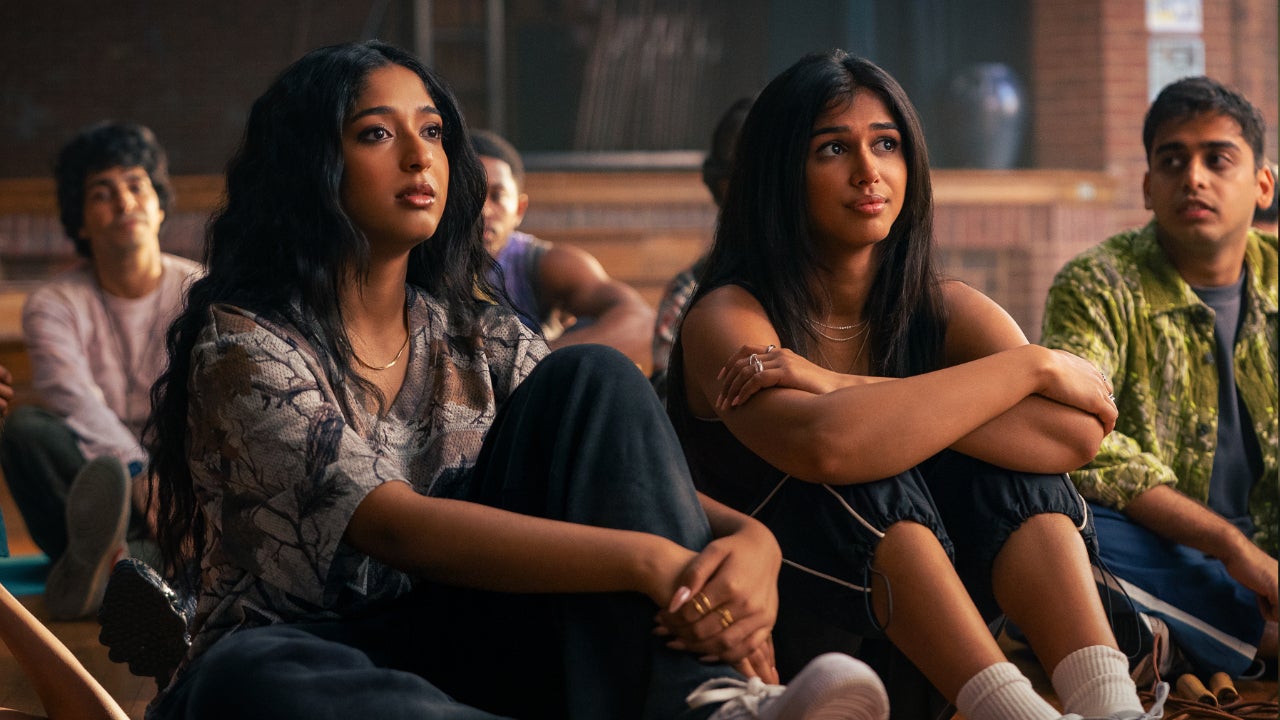

That kind of schedule also changes the relationship between a film’s ambitions and its practical execution. The filmmakers cannot rely on extended production time to solve every problem. Instead, the process demands a clear sense of tone and purpose. For Murderous, the central challenge was not simply completing the picture in 10 days, but preserving the collision of comedy and thriller elements while working at that speed.
LaBute and Crovatin’s collaboration gives them a shared understanding of the material as they navigate those demands. A creative partnership can make it easier to communicate directly, particularly when choices must be made under pressure. At the same time, working with someone who is also a life partner can make the process more exposed and more demanding. The boundaries between professional disagreement and personal conversation are naturally less formal.
The project’s shoestring origins are therefore more than a production detail. They help define the film’s place within independent cinema. A shoestring thriller is built around resourcefulness. It asks the filmmakers to find suspense without depending on scale and to make humor work through character, timing and situation rather than expensive set pieces. That limitation can produce a more intimate kind of tension, one rooted in the decisions made by the people on screen.
Advertisement



The comedy element may also give Murderous a way to approach its darker material from an unexpected angle. When a thriller includes humor, the audience’s response becomes less predictable. A moment that might otherwise be read as purely threatening can acquire an absurd or uncomfortable edge. Likewise, a joke can carry an undercurrent of danger. The result is a film that asks viewers to adjust their expectations rather than follow a familiar genre path.
That uncertainty appears to be part of the appeal for LaBute. His willingness to divide audiences suggests that he is not treating consensus as the primary measure of success. In his view, an audience that strongly dislikes a film may still be more engaged than one that watches it passively. For an independent project, provoking a conversation can be a meaningful achievement, especially when the film is made outside the scale and conventions of mainstream entertainment.
Crovatin’s involvement is equally significant because she is not presented only as a performer attached to someone else’s production. Her role in the project is tied to the larger creative partnership she shares with LaBute. That connection places her in a position to help shape the film’s identity while also participating in the practical work required to bring it to the screen.
Advertisement


Their collaboration reflects a familiar but demanding pattern in independent filmmaking: a small group of people carrying multiple responsibilities at once. When a production is completed in just 10 days, the distance between conception and execution becomes very short. The people developing the project must also remain closely connected to the daily realities of making it. There is little space for a large chain of approval, and that can allow a strong creative point of view to remain visible.
At the same time, speed can create its own creative energy. A compressed schedule may prevent a production from becoming overly cautious. Once filming begins, the need to move forward can encourage instinctive choices and keep the focus on performance, pacing and the essential shape of each scene. That energy is particularly useful for a movie that depends on tonal shifts, since comedy and suspense both require timing.
For viewers, the combination of a short shoot, a low-budget approach and an intentionally provocative sensibility offers a reason to look beyond conventional expectations. Murderous is not being positioned as a safe genre exercise. Its premise, as described by its creators, is connected to the idea that a film should make a clear impression, even if that impression is not shared by everyone who sees it.
Advertisement

That philosophy can be risky. Dividing an audience means accepting that some reactions will be negative, and a film that moves between comedy and darker thriller territory may be especially vulnerable to disagreement. One viewer may see the mixture as daring, while another may find the tonal shifts unsettling or difficult to accept. Yet that very possibility is central to the filmmakers’ stated goal. They are more interested in creating a response than in smoothing away every rough edge.
Independent films often reach audiences because they offer a perspective that feels less standardized. Without the same commercial expectations attached to a major studio release, filmmakers can concentrate on unusual combinations and personal instincts. In the case of Murderous, the unusual combination is its comic-thriller identity and its deliberately constrained production. LaBute and Crovatin are using a small framework to pursue a film that aims for a large reaction.
The 10-day production also places emphasis on what cannot be measured through budget. Suspense does not depend solely on expensive visuals, just as comedy does not require elaborate staging. Both genres rely on control: the control of information, rhythm, performance and audience expectation. A compact production can still be effective if those elements are handled with precision.
Advertisement


LaBute’s comments about audience division suggest that the film’s success will not be defined simply by whether it is broadly liked. Instead, Murderous seems intended to participate in the kind of conversation that surrounds provocative independent work. It may appeal strongly to some viewers, frustrate others and leave few people entirely neutral. That is a different goal from producing a universally agreeable entertainment experience.
For Crovatin and LaBute, the film is also an example of what can be accomplished through a close creative alliance. Their personal relationship is part of the project’s background, but the production still has to function as a professional collaboration. The ability to make decisions together, maintain a shared tone and complete a demanding shoot in 10 days speaks to the practical side of that alliance.
As a result, the story behind Murderous is inseparable from the film’s independent character. It is a comedy thriller made quickly, with limited means and a willingness to embrace disagreement. Rather than treating those conditions as obstacles to hide, LaBute and Crovatin have made them part of the project’s identity.
Advertisement


Whether audiences respond warmly or sharply, the filmmakers appear to regard engagement as more valuable than indifference. Their stated preference for dividing viewers rather than boring them provides the clearest explanation of the film’s approach. Murderous is built around the belief that a small, risky movie can earn attention by being specific, tonally unpredictable and unafraid of strong reactions.