Every Sergio Leone Western Movie, Ranked
From A Fistful of Dollars to Once Upon a Time in the West, Sergio Leone’s five westerns transformed the genre through unforgettable characters, operatic violence and Ennio Morricone’s iconic music.
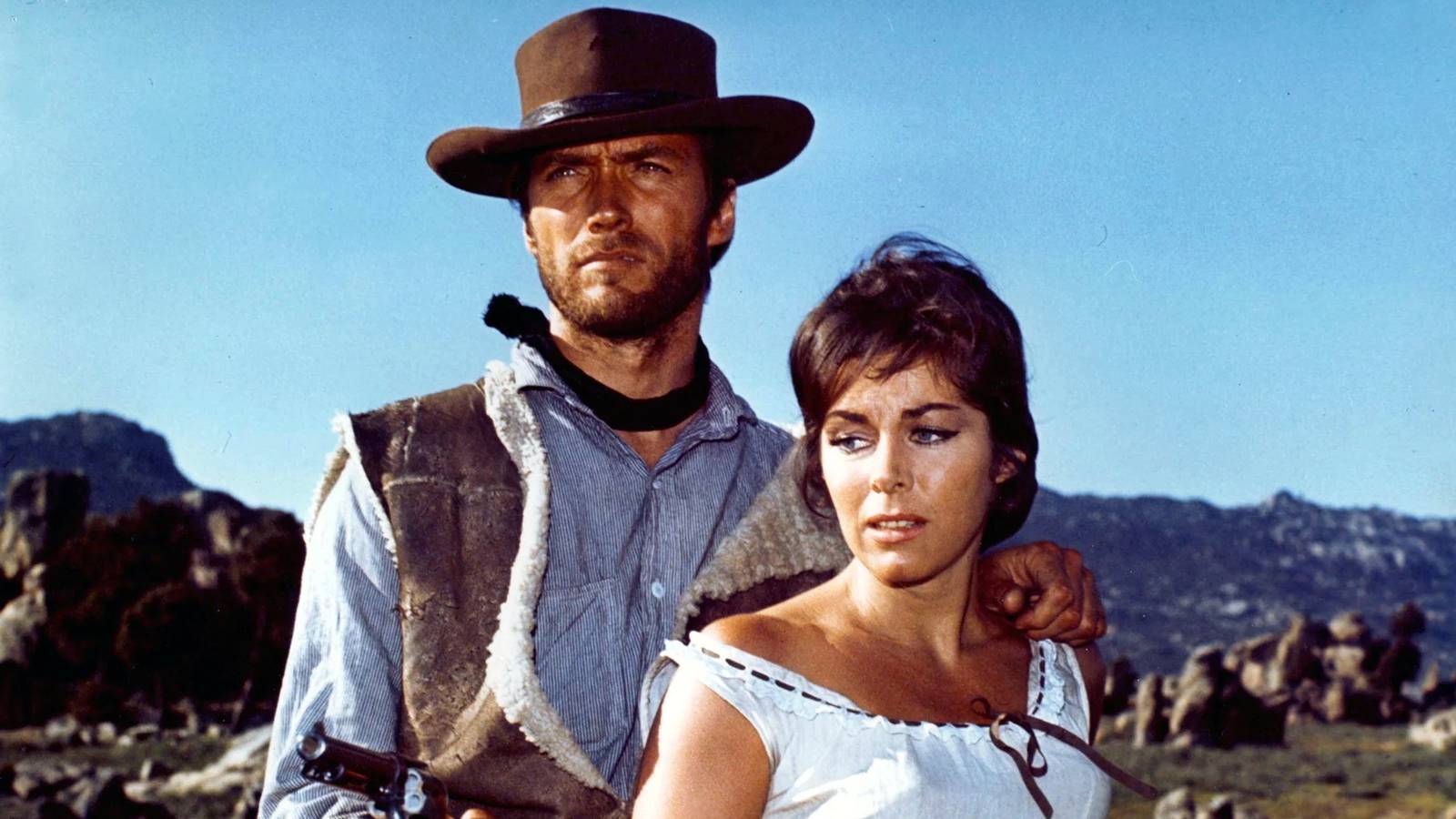
Sergio Leone made only five westerns as a director, but their influence is far greater than that number suggests. Across the 1960s and early 1970s, he reshaped the American western into something more stylized, atmospheric and psychologically severe. His films replaced the clean moral divisions of traditional studio westerns with opportunists, killers, revolutionaries and drifters who often survive through instinct rather than heroism.
Leone’s westerns are frequently grouped together as the “Dollars Trilogy,” even though the three films do not tell one continuous story. They are connected more by tone, recurring ideas and Clint Eastwood’s screen persona than by a conventional narrative. His later films expanded that style, moving from spare frontier stories to sweeping examinations of violence, history and betrayal.
Ranking Leone’s westerns is difficult because each film aims at something different. Some are tightly constructed entertainments, while others are deliberately grand, patient and meditative. The order below considers their overall achievement, influence, storytelling and the distinctive qualities that make each film endure.



5. Duck, You Sucker! (1971)
Also released under the title A Fistful of Dynamite, Duck, You Sucker! is the least celebrated of Leone’s westerns, yet it remains an ambitious and frequently fascinating film. Set during the Mexican Revolution, it pairs an Irish explosives expert with a Mexican bandit whose criminal instincts gradually become entangled with a larger political struggle.
The film initially appears to be a broad adventure built around an unlikely partnership. Rod Steiger plays Juan Miranda as a swaggering, self-interested outlaw, while James Coburn brings a more reserved and world-weary presence to John Mallory. Their contrasting personalities provide much of the film’s energy. Juan is motivated by immediate rewards, whereas Mallory carries the emotional weight of political violence and personal loss.


Leone uses their relationship to explore the gap between revolution as an ideal and revolution as a brutal, chaotic reality. The movie contains explosive set pieces and comic exchanges, but its mood gradually darkens. Behind the action is a skepticism about the way ordinary people are drawn into historical events they do not fully understand.
Duck, You Sucker! can feel uneven because its tonal shifts are unusually pronounced. The humor is broad, the political material is heavy, and the film’s long running time gives its quieter passages considerable space. Some viewers may find that combination rewarding; others may feel that the movie lacks the precision of Leone’s earlier work.
Even at its most excessive, however, the film has the director’s signature visual confidence. Dusty landscapes, carefully staged confrontations and sudden eruptions of violence give it a scale that distinguishes it from a conventional action western. It ranks fifth not because it lacks imagination, but because its impressive ideas do not always fit together as smoothly as they do in Leone’s best films.


4. A Fistful of Dollars (1964)
A Fistful of Dollars introduced the style that would define Leone’s career. The story places a nameless gunslinger in a town controlled by two rival factions. Rather than choosing a side out of principle, he manipulates both groups for his own advantage, turning their hostility into an opportunity.
Clint Eastwood’s performance is central to the film’s impact. His character says little, observes everything and treats danger as a problem to be solved rather than a moral test. Eastwood’s stillness creates a sharp contrast with the violence around him. The gunslinger is not presented as a spotless defender of justice, but he possesses a practical code that gradually becomes visible beneath his self-interest.



The movie’s most important breakthrough was its rejection of the polished look associated with many earlier Hollywood westerns. Leone emphasizes dirt, sweat, rough clothing and exhausted faces. He also treats silence as a dramatic weapon. A glance, a pause or the sound of boots approaching can carry as much tension as a conversation.
Ennio Morricone’s score is equally important. Instead of functioning as background decoration, the music becomes part of the film’s identity, using unusual sounds and rhythms to amplify the action and shape the viewer’s expectations. The result is a western that feels both familiar and strikingly new.
The plot is comparatively simple, and some supporting characters are defined more by their function than by deep development. The film also announces its influences openly, adapting the basic situation of Akira Kurosawa’s Yojimbo into a frontier setting. Yet A Fistful of Dollars remains a landmark because of how decisively it established the visual and emotional vocabulary of the spaghetti western.


It is lean, inventive and enormously entertaining. Compared with Leone’s later films, it is less expansive and less thematically developed, but that economy is part of its appeal. The film works as a tough, direct introduction to a new kind of western hero.
3. For a Few Dollars More (1965)
For a Few Dollars More improves on its predecessor by giving Leone’s central character a stronger counterpart. Eastwood returns as the nameless gunslinger, but this time he shares the story with Lee Van Cleef’s Colonel Douglas Mortimer, a bounty hunter whose calm professionalism conceals a deeply personal motive.

The relationship between the two men gives the film a richer structure. At first they are competitors chasing the same reward. Their rivalry is expressed through glances, small acts of one-upmanship and a shared appreciation for precision. Gradually, their interests align, allowing the story to become both a hunt and a partnership.
Van Cleef’s performance is one of the great strengths of the film. Mortimer is more formally composed than Eastwood’s drifter, and his weapons, clothing and manner suggest a carefully maintained identity. The mystery surrounding him is not merely a plot device. It gives the film an emotional center that becomes increasingly important as the story moves toward its final confrontation.
Gian Maria Volonté plays the outlaw El Indio as a volatile and unsettling antagonist. He is not simply a villain who stands in the heroes’ way. His behavior is erratic, his cruelty is personal and his moments of vulnerability make him more complicated than the conventional western outlaw. The film’s interest in memory and revenge gives the climactic duel greater weight than a standard bounty hunt.

Leone’s direction is more assured here than in A Fistful of Dollars. He extends suspense through carefully measured editing, dramatic close-ups and recurring musical motifs. The film can take its time with a watch, a weapon or a character’s expression, turning objects and gestures into sources of tension.
For a Few Dollars More is also a particularly effective bridge between the stripped-down first film and the larger spectacle of The Good, the Bad and the Ugly. It retains the directness of a revenge western while adding a more carefully developed emotional relationship. It may not have the historical scale of Leone’s later masterpieces, but its balance of action, character and atmosphere makes it one of his most satisfying films.
2. The Good, the Bad and the Ugly (1966)
The Good, the Bad and the Ugly is Leone’s most exuberant western and, for many viewers, the most immediately entertaining. Set against the American Civil War, the film follows three men who compete to locate a buried cache of gold. Their shifting alliances make the story unpredictable, while their personalities provide the movie with its distinctive comic and dramatic rhythm.
Eastwood’s Blondie is the “Good” figure, though the label is relative. He is calculating and capable of cruelty, but he is also more restrained than the other two men. Lee Van Cleef’s Angel Eyes represents the “Bad” with unnerving clarity, a professional killer whose loyalty is determined by money. Eli Wallach’s Tuco, the “Ugly,” is loud, greedy and frequently ridiculous, yet he is also resourceful and emotionally complicated.
Wallach’s performance gives the film much of its humor. Tuco’s arguments with Blondie are funny because they are rooted in genuine resentment and dependence. The two men exploit each other, betray each other and repeatedly find themselves forced back into an uneasy partnership. Their relationship prevents the film from becoming a simple contest between an uncomplicated hero and a straightforward villain.
The movie’s scale is immense, but Leone never loses interest in small details. A close-up of a face can interrupt a battlefield sequence, while a long silence can make a three-way standoff feel almost unbearably suspenseful. Morricone’s famous musical themes help connect the film’s comic episodes, grim violence and operatic finale.
The Civil War setting also gives the film a harsher view of institutions and authority. Soldiers, prisoners and civilians are caught in a conflict that often seems absurd from the ground. The pursuit of gold continues alongside the destruction of war, creating a tension between individual greed and mass suffering.
The film is sometimes criticized for its episodic structure and long running time. Those qualities are also part of its identity. It moves from slapstick to tragedy, from vast landscapes to claustrophobic encounters, without trying to maintain a single conventional tone. The result is a sprawling piece of popular filmmaking that is as memorable for its faces, music and set pieces as it is for its story.


1. Once Upon a Time in the West (1968)
Once Upon a Time in the West is Leone’s most mature western and the clearest expression of his fascination with the end of an era. The film is built around the arrival of the railroad in the American West, using that historical change as the backdrop for a story about land, greed, revenge and the people displaced by modernization.
Henry Fonda’s casting as the villain is one of the film’s boldest choices. Known for playing principled heroes, Fonda appears here as Frank, a cold and calculating killer. His presence immediately challenges the viewer’s expectations. The performance is effective not because Frank is flamboyant, but because his violence is delivered with chilling calm.
Charles Bronson plays Harmonica, a mysterious figure whose identity and purpose are gradually revealed. Like Eastwood’s earlier gunslinger, Harmonica communicates through silence and controlled gestures. Yet he is a more tragic character, defined almost entirely by a past injury and a long-delayed desire for justice.
Claudia Cardinale gives the film its emotional and practical center as Jill McBain. She is not simply a character waiting for the men around her to determine her future. Her situation places her at the intersection of personal survival, economic change and the expansion of the railroad. Through Jill, the film connects its mythic gunfighters to the ordinary people who must live with the consequences of their violence.
Leone’s pacing is famously deliberate. The opening sequence at the railway station turns waiting into suspense, making small movements and ambient sounds feel monumental. The director repeatedly allows landscapes and pauses to carry meaning. Rather than rushing from one action scene to the next, he treats the western frontier as a place already disappearing.

The film is also a culmination of Leone’s partnership with Morricone. Its musical themes are associated with characters and moods, while the sound design gives the environment an almost physical presence. Wind, machinery, footsteps and distant trains become essential parts of the drama.
Once Upon a Time in the West can be demanding because it refuses to hurry. Its story is more mournful than the Dollars films, and its characters often seem like figures trapped between the mythology of the Old West and the modern world approaching behind the railroad. But that ambition is precisely what makes it Leone’s finest western. It is a revenge story, a frontier epic and an elegy for a genre’s familiar world.
Sergio Leone’s westerns remain influential because they changed more than the appearance of cowboy movies. They altered the rhythm of suspense, the presentation of violence and the idea of what a western protagonist could be. His heroes are often motivated by money, memory or survival rather than pure virtue, and his villains can be as magnetic as his leads.

The ranking ultimately comes down to preference. Viewers looking for fast-moving genre invention may favor A Fistful of Dollars. Those who want a character-driven partnership may choose For a Few Dollars More, while fans of scale and dark humor may place The Good, the Bad and the Ugly first. But taken together, the five films form one of cinema’s most distinctive bodies of work, moving from compact frontier adventure to sweeping reflection on the birth and death of the western myth.