The 6 Best Mystery Movies Released Since 2000, Ranked
From unsettling psychological puzzles to courtroom dramas with no easy answers, these six modern mystery films show how wide the genre can be.

A great mystery does more than conceal an answer until the final scene. It creates a question that continues to change as new information appears, forcing viewers to reconsider what they think they know. The best examples can operate as thrillers, dramas, horror films, or even dreamlike works of art while still offering the same basic pleasure: the feeling of following a trail that may lead somewhere unexpected.
Since 2000, filmmakers have expanded the mystery genre far beyond the traditional detective story. Some films ask who committed a crime. Others ask whether a crime occurred at all, whether a witness can be trusted, or whether the truth is even possible to separate from memory and imagination. The six films below represent that range. They are ranked not simply by the cleverness of their plots, but by how effectively they use uncertainty to explore fear, identity, power, grief, and perception.
6. Zodiac
Advertisement


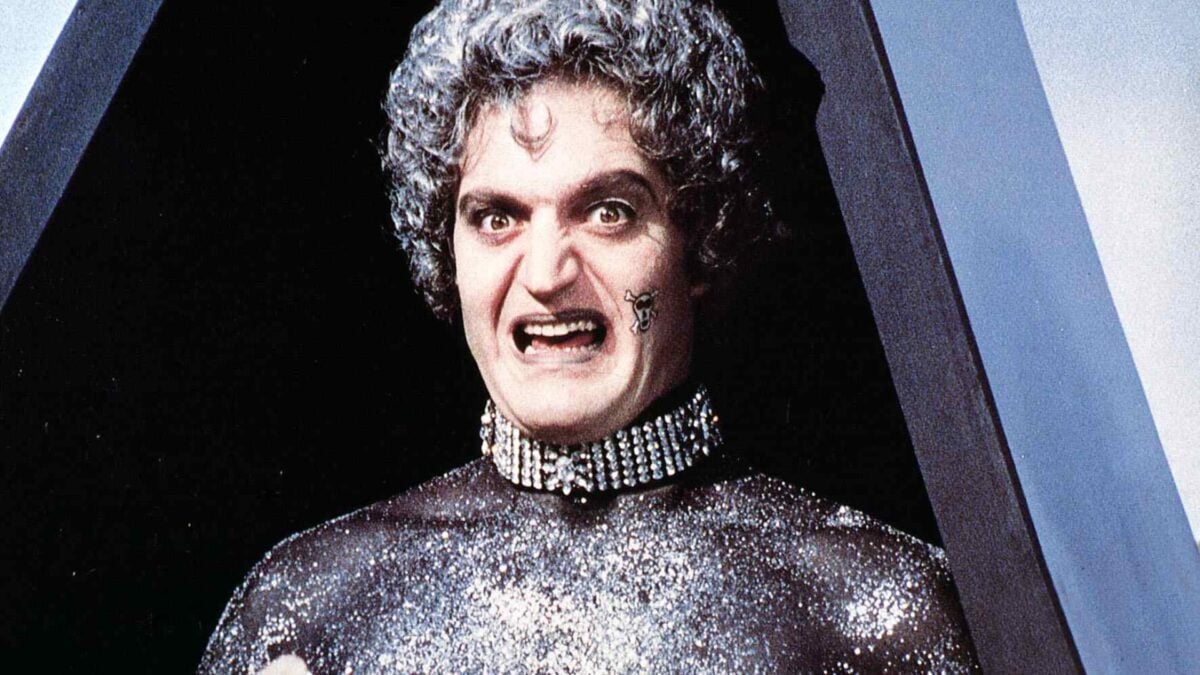
Zodiac is a mystery about obsession as much as it is about an unsolved case. Its central investigation begins with a series of threatening communications and violent crimes, but the film gradually shifts its attention toward the people who dedicate themselves to finding the person responsible. The search becomes a force that reshapes their lives, their priorities, and their understanding of what counts as proof.
What makes the film so absorbing is its refusal to turn investigation into a simple path toward closure. Evidence is examined, theories are developed, and suspects are considered, yet certainty remains difficult to reach. The audience experiences the same frustration as the investigators: every promising lead may open another question instead of resolving the first one.
The film also understands that a mystery can remain powerful without a perfectly satisfying solution. Rather than treating ambiguity as a flaw, it makes uncertainty the subject. The result is a patient and deeply controlled thriller in which the passage of time becomes part of the suspense. Zodiac is less interested in a sensational final revelation than in showing how a mystery can take hold of an entire community and refuse to let go.
Advertisement



5. Gone Girl
Gone Girl begins with the disappearance of a wife and the immediate suspicion surrounding her husband. From that familiar setup, it builds a mystery about marriage, public image, media performance, and the stories people construct to protect themselves. The film continually rearranges the viewer's understanding of its characters, making it dangerous to accept any early impression as the complete truth.
Its central strength is the way it turns social expectations into clues. A gesture, an interview, or a carefully chosen statement can reveal as much about a character's strategy as a physical piece of evidence. The investigation unfolds in public, where news coverage and popular opinion become part of the case. That pressure makes the mystery feel larger than the question of who is responsible. It becomes a question of who can control the narrative.
Advertisement

Gone Girl is also notable for its sharp interest in performance. The people at its center understand that identity can be presented, edited, and sold to others. Their private lives and public versions of themselves do not always match, and the gap between those versions creates much of the suspense. The film is darkly entertaining, but its lasting impact comes from the uncomfortable idea that a convincing story may matter more than the truth behind it.
4. Get Out
Get Out combines mystery with horror and social satire, using a seemingly ordinary visit to a partner's family home as the starting point for a steadily escalating investigation. The protagonist senses that something is wrong, but the people around him repeatedly offer explanations that sound polite, harmless, or reassuring. That contrast between friendly appearances and disturbing behavior gives the film its distinctive tension.
Advertisement



The mystery works because the audience is encouraged to notice details before they fully understand their meaning. Conversations, reactions, and changes in behavior carry a strange weight. Seemingly minor moments become important as the film's hidden structure comes into view. The process of discovery is frightening not only because of what is uncovered, but because the protagonist's concerns are constantly dismissed or disguised by the people who surround him.
Get Out also demonstrates how a genre mystery can express a larger social reality. Its suspense grows from the distance between what characters say and what they intend, exposing the dangers that can hide behind manners and accepted behavior. The film is entertaining as a thriller, unsettling as horror, and precise as satire. Its central revelation does not merely explain the plot; it gives earlier scenes a new and more troubling meaning.
The movie's effectiveness comes from its balance. It provides enough information for viewers to form theories, but it keeps the full design concealed until the right moment. It asks the audience to investigate along with its protagonist, transforming discomfort into curiosity and then into alarm. That combination makes Get Out one of the defining modern mystery thrillers.
Advertisement


3. Anatomy of a Fall
Anatomy of a Fall places its mystery inside a courtroom, where a death is examined through competing accounts rather than through a conventional detective chase. A woman becomes the focus of scrutiny after her husband dies, and the question of what happened is filtered through testimony, interpretation, and the private history of a troubled relationship.
The film's great achievement is that it makes ordinary details feel potentially decisive. Words exchanged between partners, disagreements about responsibility, and differences in memory all become part of the evidence. Yet the courtroom cannot simply recover the past as if it were an objective recording. Every account is shaped by emotion, language, perspective, and the desire to persuade.
Advertisement

That approach makes the film a mystery of interpretation. Viewers are encouraged to weigh possibilities, but they are also reminded that the available evidence may never produce a single uncontested answer. The drama comes from watching a personal relationship transformed into a public argument, with intimate moments examined as though they were pieces of a puzzle.
Anatomy of a Fall is especially compelling because it does not reduce uncertainty to a gimmick. The unresolved elements are connected to the film's larger interest in how people judge one another. The mystery becomes a way to explore the limits of knowledge and the difficulty of assigning blame when the most important evidence belongs to the past. It is an intelligent, tense, and emotionally complex example of a modern mystery.
2. Mulholland Dr.
Advertisement


Mulholland Dr. is one of the most challenging mysteries of the period because it treats uncertainty as part of its form. It begins with recognizable elements of a mystery: an accident, a loss of memory, a new friendship, and a search for identity. But the film gradually moves away from straightforward explanation, creating a world in which dreams, memories, desires, and performances overlap.
Its clues do not always behave like clues in a traditional thriller. A repeated image, a change in tone, or an apparently separate storyline may acquire significance only after the film has ended. Instead of handing viewers a clear map, the movie asks them to search for emotional and thematic connections. The result is a viewing experience that can feel different depending on which details seem most important.
The mystery of Mulholland Dr. is therefore not limited to discovering what happened. It also involves asking what kind of reality the film is presenting and how its characters use fantasy to protect themselves from painful truths. Hollywood functions as both a setting and an idea, a place where identity can be created but also distorted. Behind the glamour is a persistent sense of loneliness and danger.
Advertisement


Few films make confusion so purposeful. Mulholland Dr. remains memorable because it does not treat explanation as the only form of understanding. Its images, shifts, and contradictions communicate a psychological truth even when the literal plot resists a single reading. For viewers willing to accept a mystery without a conventional solution, it is an exceptionally rich work.
1. The Prestige
The Prestige is built around a rivalry between two illusionists, but its real subject is the cost of pursuing a secret. The film presents performance as an art of controlled deception, then applies the same principle to its own storytelling. Information is withheld, revealed, and reinterpreted, encouraging viewers to look back at earlier moments with a different understanding.
Advertisement
At the center of the story is a question about how an impossible effect might be achieved. That question gives the film a strong puzzle-box structure, but the mystery works because it is tied to character. The competing performers are not merely solving tricks; they are trying to surpass one another, and their ambition becomes increasingly destructive. Every discovery carries a personal price.
The film is particularly effective at showing why people choose to believe in mysteries. A trick succeeds because an audience wants to be astonished, yet the same desire can make people overlook what is directly in front of them. The characters exploit that impulse, while the film exploits it in the viewer. What first appears to be a simple rivalry gradually reveals layers of sacrifice, secrecy, and self-deception.
The Prestige earns the top position because its mystery operates on several levels at once. It offers the immediate pleasure of a carefully constructed thriller, the tension of a personal feud, and a broader reflection on obsession. Its revelations do not erase the mystery; they deepen it by showing how much the characters have surrendered in order to protect their secrets. The result is a film that rewards attention and invites repeated viewing.
Advertisement



These six films demonstrate that the modern mystery is not defined by one formula. Zodiac finds suspense in an investigation that cannot provide easy closure. Gone Girl examines the power of public stories. Get Out hides horror beneath familiar social rituals. Anatomy of a Fall turns testimony into an uncertain search for truth. Mulholland Dr. transforms confusion into a language of dreams and identity, while The Prestige makes secrecy inseparable from ambition.
Together, they show why mystery remains one of cinema's most adaptable genres. A compelling mystery can ask who committed an act, what really happened, or whether the truth can be known at all. It can frighten viewers, challenge them, or make them question their own assumptions. The finest films leave behind more than an answer. They leave behind the urge to return to the beginning and look again.