Robert Pattinson Says Bringing His Batman Into James Gunn’s DC Universe Would Be Difficult
Robert Pattinson has addressed the possibility of his Batman appearing in James Gunn’s DC Universe, saying the crossover would be difficult as the new franchise begins with Superman.
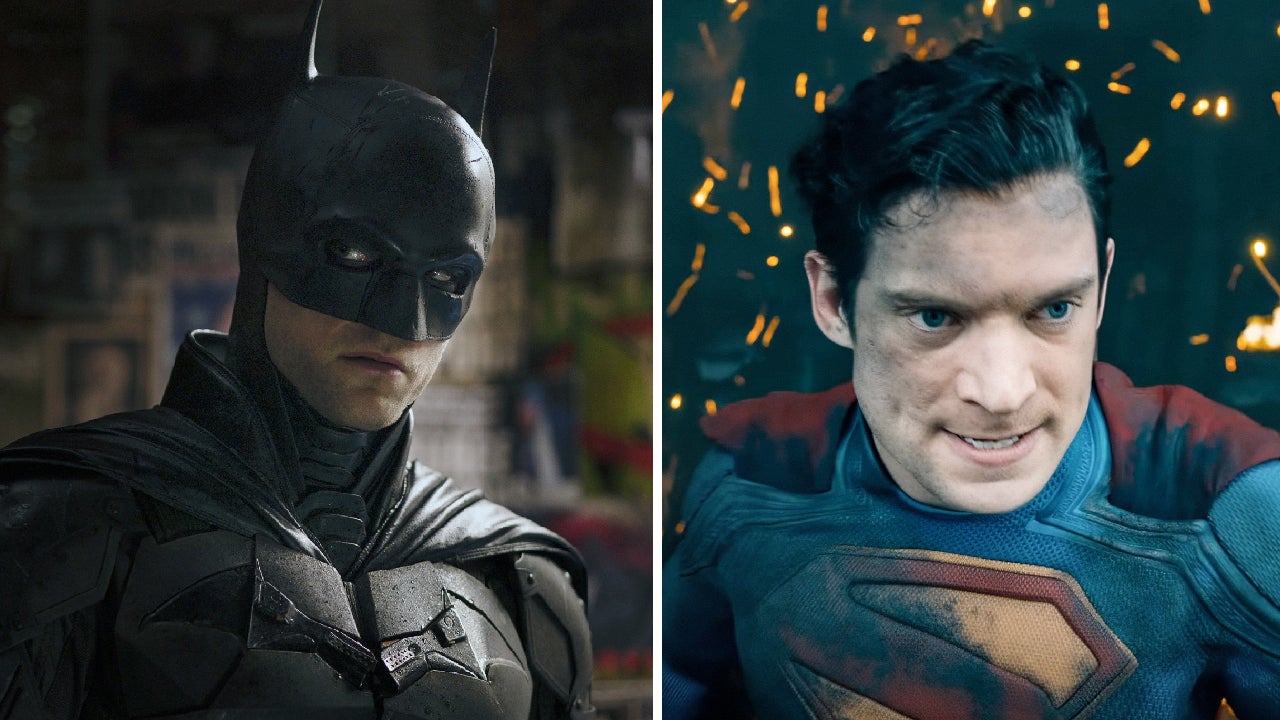
Robert Pattinson has offered a cautious assessment of whether his version of Batman could become part of James Gunn’s developing DC Universe. According to the actor, bringing the character into that shared setting would be “difficult,” a comment that highlights the complicated position occupied by his take on the Dark Knight.
The remarks arrive as Gunn’s DC Universe begins with Superman, creating a new framework for DC characters and stories. Pattinson’s Batman, meanwhile, exists as a distinct interpretation of the character. That difference does not necessarily make a crossover impossible, but it does make the idea considerably more complicated than simply placing two familiar heroes in the same film.
For audiences, the appeal of such a meeting is easy to understand. Batman and Superman are among the most recognizable figures in popular culture, and seeing Pattinson’s grounded, brooding detective stand alongside the Superman at the center of Gunn’s new continuity would be an attention-grabbing event. Yet Pattinson’s response suggests that the creative and practical questions behind that possibility are more substantial than fan enthusiasm alone.

A shared universe requires more than recognizable characters. It needs a consistent understanding of how those characters relate to one another, what kind of world they inhabit and how their individual stories fit into a larger plan. Pattinson’s comment points to the challenge of reconciling two different approaches to Batman without weakening either one.
The central issue is not simply whether Pattinson could play Batman again. The more difficult question is which Batman the character would be in a new DC Universe. A version designed for one story and one tone may not easily transfer into a separate franchise built around its own continuity. Even if the costume, name and performance remained familiar, the surrounding world could change the meaning of the character.
That distinction matters because Batman is unusually flexible. The character can be presented as a detective working through a harsh crime story, a superhero operating beside extraordinary figures or a larger-than-life icon whose adventures embrace the fantastic. Each interpretation can work on its own terms. Problems arise when the boundaries between those interpretations are treated as interchangeable without a clear creative reason.

Pattinson’s response therefore sounds less like a definitive rejection and more like an acknowledgment of the work a crossover would require. Saying that the idea would be difficult leaves room for discussion while recognizing that the two versions of DC storytelling may not naturally align. It also avoids reducing the decision to a simple question of scheduling or studio preference.
James Gunn’s DC Universe is being established as a new connected setting. With Superman serving as its launch point, the franchise has the opportunity to define how its characters coexist from the beginning. That makes every major casting and continuity decision especially important. Introducing a Batman already associated with another interpretation could invite questions about whether the new universe is truly starting fresh or drawing from an earlier framework.
At the same time, the existence of a separate Batman does not automatically prevent the character from appearing elsewhere. A comic-book universe can support multiple versions of the same hero, particularly when each story establishes its own identity. The challenge is communicating that distinction clearly to the audience. If Pattinson’s Batman were brought into Gunn’s continuity, the film would need to explain not only why he is there, but also how his presence fits the rules of that world.


That explanation could take many forms, but the source material does not indicate that any specific plan is in place. Pattinson’s comment is best understood as a reflection on the difficulty of the concept, not as confirmation of a future appearance or a formal announcement about the character’s status. The actor has not, based on the supplied remarks, presented a detailed roadmap for a crossover.
The uncertainty may be part of what makes the subject so persistent. Batman is one of DC’s most valuable characters, while Pattinson’s portrayal has attracted considerable attention. Put alongside the arrival of a new Superman and a new cinematic universe, the possibility of overlap becomes an obvious topic for discussion. But a popular idea is not automatically a suitable one, and Pattinson appears to recognize that distinction.
There is also a tonal question. A Batman story can depend heavily on atmosphere, restraint and a sense of realism, while a broader superhero universe may ask the character to function within a more expansive mythology. Neither approach is inherently better. They simply place different demands on the hero. A crossover would need to preserve the qualities that define Pattinson’s performance while allowing Batman to interact naturally with the wider world around him.



If those elements were not balanced carefully, the character could feel like a visitor from another production rather than a genuine part of the new universe. The appeal of the crossover would then become its main weakness: audiences might focus on the novelty of seeing Pattinson’s Batman meet other DC figures instead of engaging with the story itself.
There is a similar concern on the Superman side. A shared film would have to give both heroes enough space to remain fully realized. Superman would need to continue representing the identity of Gunn’s new universe, while Batman would need to retain the qualities associated with Pattinson’s interpretation. The meeting could not be built only around the recognition value of the two names.
That is why Pattinson’s description of the idea as “difficult” carries more weight than a casual expression of doubt. It reflects the structural problem at the heart of the proposal. The new DC Universe is not simply a collection of characters waiting to be assembled. It is a new continuity with its own tone, direction and expectations. Any addition from outside that framework would need to serve the larger design.


For now, the clearest information is that Pattinson sees the transition as challenging. There is no supplied indication that his Batman is being incorporated into Gunn’s DC Universe, nor that a crossover has been formally developed. The comment should not be treated as confirmation that the actor is leaving the character behind either. It describes the difficulty of a particular idea rather than settling every question about Batman’s future.
That distinction is important because speculation can quickly turn a thoughtful observation into a supposed announcement. Pattinson has identified a creative obstacle; he has not provided a confirmed plan. Until more details emerge, the possibility remains exactly that: a possibility complicated by continuity, tone and the need to protect the identity of two separate cinematic approaches.
The situation also illustrates the wider challenge facing modern superhero franchises. Audiences have become familiar with interconnected stories, but connection alone is not enough to create a successful universe. Characters must have clear roles, and their worlds must feel compatible. A crossover can be exciting when it grows naturally from the story. It can feel distracting when it happens only because the characters are famous.

Batman is particularly difficult to fold into another continuity because the character’s surroundings are so important. His city, enemies, methods and emotional history all shape the way audiences understand him. Changing those elements can produce a fresh version of Batman, but it also means the character may no longer be the same figure viewers followed in an earlier story. Pattinson’s concern appears to recognize that a setting change could have consequences beyond a change in cast.
The arrival of Superman gives Gunn’s universe a chance to establish its own foundation before making such complicated connections. Whether that foundation eventually includes Pattinson’s Batman is unknown from the available information. What is clear is that any decision would need to be made with greater care than a straightforward cameo or surprise appearance.
A successful meeting would have to answer several creative questions without overwhelming the audience. Why do these versions belong together? What does each hero reveal about the other? How does the encounter advance the new universe rather than interrupt it? Most importantly, can Pattinson’s Batman enter the setting without losing the qualities that made his interpretation distinct?


Those questions explain why the possibility remains intriguing even as it appears difficult. The contrast between Pattinson’s Batman and the world being introduced through Gunn’s Superman could create meaningful dramatic tension. It could also expose the limits of trying to unite interpretations that were not originally designed to share a continuity. The outcome would depend on the story, not simply on the popularity of the actors or characters involved.
For the moment, Pattinson’s statement offers a measured perspective on a much-discussed possibility. His Batman may be familiar to audiences, but familiarity does not erase the boundaries between different DC projects. As James Gunn’s universe takes its first major step with Superman, the question of where this Batman belongs will remain a matter of creative judgment.
Until an official plan says otherwise, Pattinson’s Batman and Gunn’s DC Universe should be viewed as separate concepts. A future connection may be imagined, debated or explored, but Pattinson’s own assessment makes clear that such a move would not be effortless. It would require a carefully constructed bridge between two versions of DC storytelling—and, for now, that bridge has not been announced.

