How Oprah Winfrey Became America’s Cultural Oppenheimer
Oprah Winfrey’s influence reached far beyond television, helping shape what audiences read, purchased and accepted as meaningful.
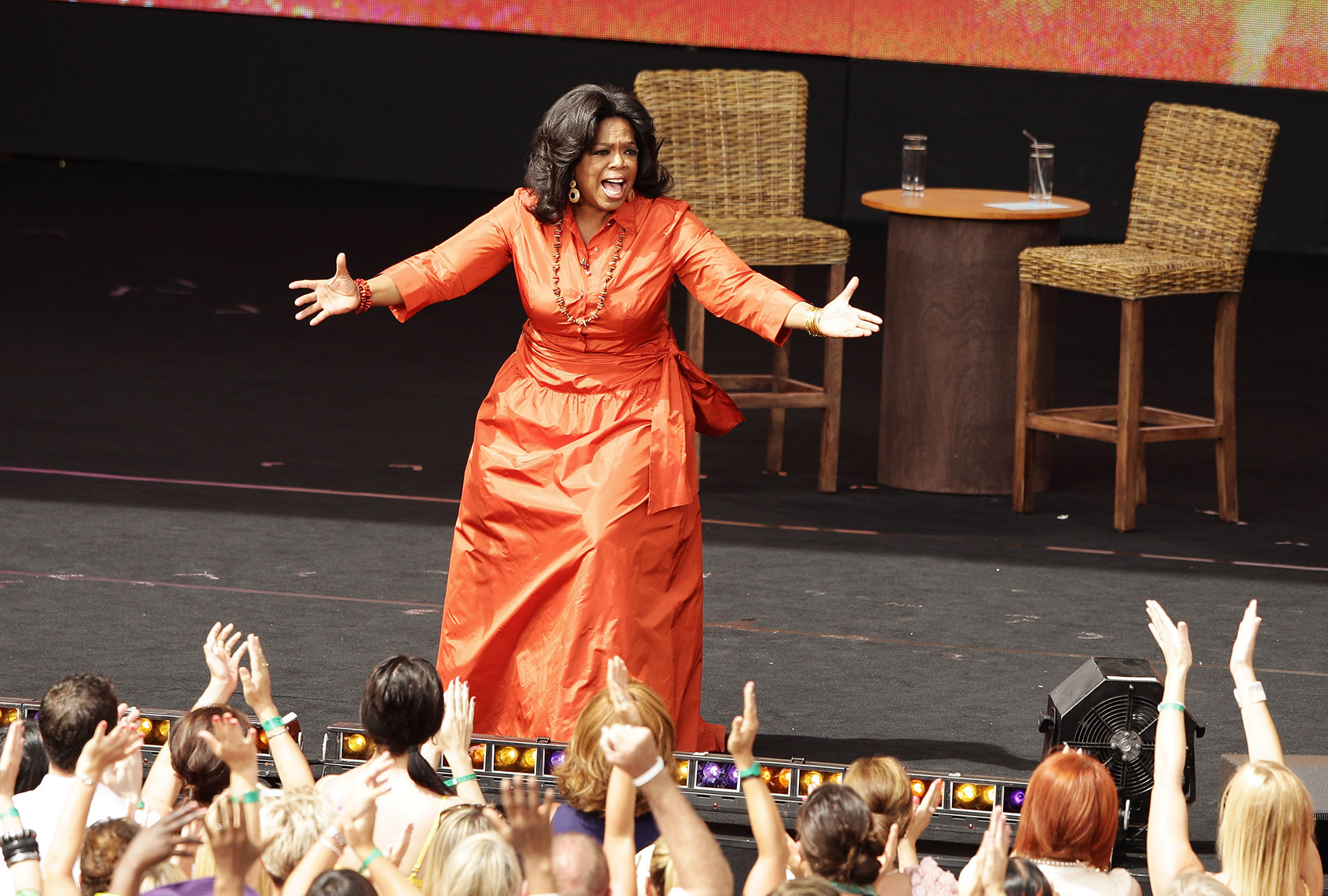
Oprah Winfrey’s influence cannot be measured only by the size of her television audience or the longevity of her public career. Her reach extended into the habits and judgments of everyday life. She helped shape what America read, what it bought and, in a broader sense, what it believed. That influence made her more than a television host. It made her a cultural authority.
The comparison suggested by the phrase “America’s cultural Oppenheimer” is deliberately unsettling. It presents Winfrey as a figure whose power produced enormous effects, some celebrated and some difficult to defend. The point is not that television and scientific warfare are equivalent. They are not. The comparison instead asks what happens when one person becomes capable of directing the attention, enthusiasm and trust of an entire society.
For years, Winfrey’s public image was built around intimacy. Her television presence felt personal rather than distant, even when she was speaking to millions of viewers. That sense of connection gave her recommendations unusual force. A book she discussed could become a national conversation. A product she endorsed could acquire a new kind of desirability. An idea introduced in a familiar, emotionally open setting could travel far beyond the program itself.


This was the central achievement of her cultural power: she made influence feel like friendship. Audiences did not necessarily experience her guidance as an order from an institution. It arrived as a suggestion from someone who appeared to understand ordinary anxieties, hopes and ambitions. That emotional structure helped explain why her authority could move so easily from entertainment into reading, shopping and personal belief.
The distinction matters. Traditional institutions often announce their authority through credentials, official language or established status. Winfrey’s authority worked differently. It was grounded in recognition and trust. Viewers could feel that her judgments were connected to lived experience rather than abstract expertise. That made her voice accessible, but it also made it harder to separate affection from evaluation.
Her cultural importance therefore rested on a complicated exchange. The audience gave her attention and confidence; she returned recommendations, interpretations and emotional framing. Each side reinforced the other. The more viewers trusted her, the more consequential her choices became. The more consequential those choices became, the more evidence they seemed to offer that her judgment deserved trust.


That cycle helps explain why Winfrey shaped what America read. Literature was not presented only as an academic field or a private pastime. It could become a shared emotional experience, something to discuss with strangers and friends. Her influence helped turn the act of choosing a book into a public event. Reading, under that model, carried the energy of participation in a larger national conversation.
Yet the power to elevate a work also creates the power to narrow attention. When one person becomes an exceptionally influential guide, audiences may encounter certain books, subjects and interpretations more readily than others. This does not mean that every recommendation is misguided, or that readers are incapable of making independent choices. It means that cultural visibility is never distributed evenly. Some works receive a powerful invitation into public life; others remain outside the main conversation.
The same tension appeared in consumer culture. Winfrey’s influence could make products feel less like anonymous objects and more like pieces of a trusted lifestyle. The appeal was not simply ownership. A purchase could suggest comfort, improvement, self-care or belonging. The recommendation carried a story about the kind of life the audience might create for itself.



That relationship between aspiration and consumption was persuasive because it treated shopping as an emotional decision. People were not merely being told what to buy. They were being offered a way to imagine themselves. The boundary between advice and marketing could consequently become difficult to see. A trusted voice might give commercial choices the warmth of personal guidance, while commercial culture gained the legitimacy of intimate conversation.
Winfrey’s effect on belief was still broader. Belief here does not have to mean a formal political or religious position. It can refer to the conclusions people draw about personal responsibility, success, healing, relationships, taste and the meaning of a good life. A powerful media figure can shape those conclusions simply by deciding which stories deserve sympathy, which arguments receive attention and which experiences are treated as representative.
That kind of influence is especially strong when it operates through narrative. Stories do not merely provide information; they arrange emotion. They tell audiences whom to trust, whom to forgive and what kind of change seems possible. Winfrey’s public role was closely associated with this emotional arrangement. Her platform could make individual experiences feel universal, while also placing a particular interpretation around them.



This is where the praise surrounding her legacy becomes more complicated. The same influence that encouraged curiosity, conversation and self-reflection could also make questionable ideas appear more credible. If a recommendation or claim arrived within a trusted relationship, the audience might respond to the relationship before examining the claim. Familiarity could soften skepticism.
The problem is not unique to Winfrey, but her scale made it unusually visible. A private opinion normally remains limited by the number of people who hear it. A celebrity’s opinion can become a cultural signal. When that signal is repeated across homes, conversations and media coverage, it may begin to look like consensus. The authority of the individual can be mistaken for proof that the idea itself is sound.
This helps explain why not all of Winfrey’s cultural impact has aged well. Time changes the way societies judge public influence. Ideas once welcomed as liberating may later appear simplistic, commercialized or insufficiently examined. Recommendations once treated as generous guidance may raise questions about responsibility. A platform that once seemed empowering may, in retrospect, have rewarded certainty over nuance.



To say that parts of her influence have aged poorly is not to erase the importance of her accomplishments. It is to recognize that cultural power has consequences beyond the intentions of the person who holds it. A public figure may want to inspire and still help popularize an idea that deserves more scrutiny. Good intentions can coexist with incomplete information, selective attention and unintended results.
The difficulty of assessing Winfrey’s legacy comes from the fact that her influence was neither wholly coercive nor wholly passive. She did not simply dictate what audiences should think. People chose to watch, listen, read and respond. They brought their own experiences to the exchange. Still, choice exists within an environment shaped by visibility, repetition and trust. The more dominant the voice, the more difficult it becomes to pretend that every option is equally available.
Calling Winfrey a cultural Oppenheimer therefore shifts the conversation away from celebrity admiration and toward responsibility. It asks whether a person who can alter public taste should be judged only by intention, popularity or personal warmth. It asks what standards should apply when entertainment becomes guidance, guidance becomes influence and influence begins to shape collective judgment.

That question has become more urgent because modern audiences are surrounded by personalities who blend private disclosure, recommendation and authority. The boundaries between host, expert, salesperson and companion are increasingly porous. Winfrey’s career offers an especially clear example of how those roles can converge. Her importance lies not only in what she said, but in the structure that made her words feel consequential.
Her model also demonstrates the enduring strength of television as a cultural force. Television can make a distant public figure feel present in a viewer’s home. It can turn an individual response into a shared ritual. It can make the selection of a book, product or belief seem like part of a common national experience. Even when audiences understand that media is constructed, the emotional impression of direct connection can remain powerful.
That impression carries both promise and risk. It can encourage people to explore subjects they might otherwise ignore. It can make complicated personal experiences visible. It can create a sense of community where isolation once prevailed. But it can also place too much interpretive power in one voice. When audiences accept a guide as unusually trustworthy, they may give that guide permission to define relevance itself.



The most useful way to understand Winfrey’s legacy is not as a simple story of triumph or failure. It is a story about the concentration of cultural power. She showed how one platform could connect entertainment to commerce, reading to identity and personal testimony to public belief. The achievement was extraordinary, but its implications were never entirely comfortable.
Her influence remains important precisely because it invites two responses at once. There is admiration for the scale of her connection with audiences and for the way she made cultural participation feel personal. There is also caution about what happens when trust becomes a substitute for scrutiny. Both responses are necessary if her place in American culture is to be understood honestly.
The lasting lesson is not that audiences should reject every recommendation from a famous person. It is that recommendations deserve examination even when they come wrapped in warmth and familiarity. A trusted voice can open a door, but it should not decide what lies beyond it. Readers, consumers and viewers still need room to question, compare and disagree.


Winfrey’s cultural power grew from the rare ability to make mass communication feel intimate. That ability helped her shape the national conversation in ways few television figures could match. It also meant that her errors, blind spots and questionable judgments could travel with the same speed as her encouragement. The influence was generous in its reach, but never harmless in its consequences.
That is the force of the Oppenheimer comparison. It treats cultural influence as something capable of changing the world around it, not merely entertaining the people who witness it. Oprah Winfrey helped determine what mattered to millions of Americans. The challenge for history is to hold that achievement together with the warning it contains: the larger the platform, the greater the obligation to question how its power is used.