The Top Sci-Fi Movie From Every Decade
From Metropolis and 2001: A Space Odyssey to Star Wars and Interstellar, science fiction has repeatedly reshaped what movies can imagine and achieve.
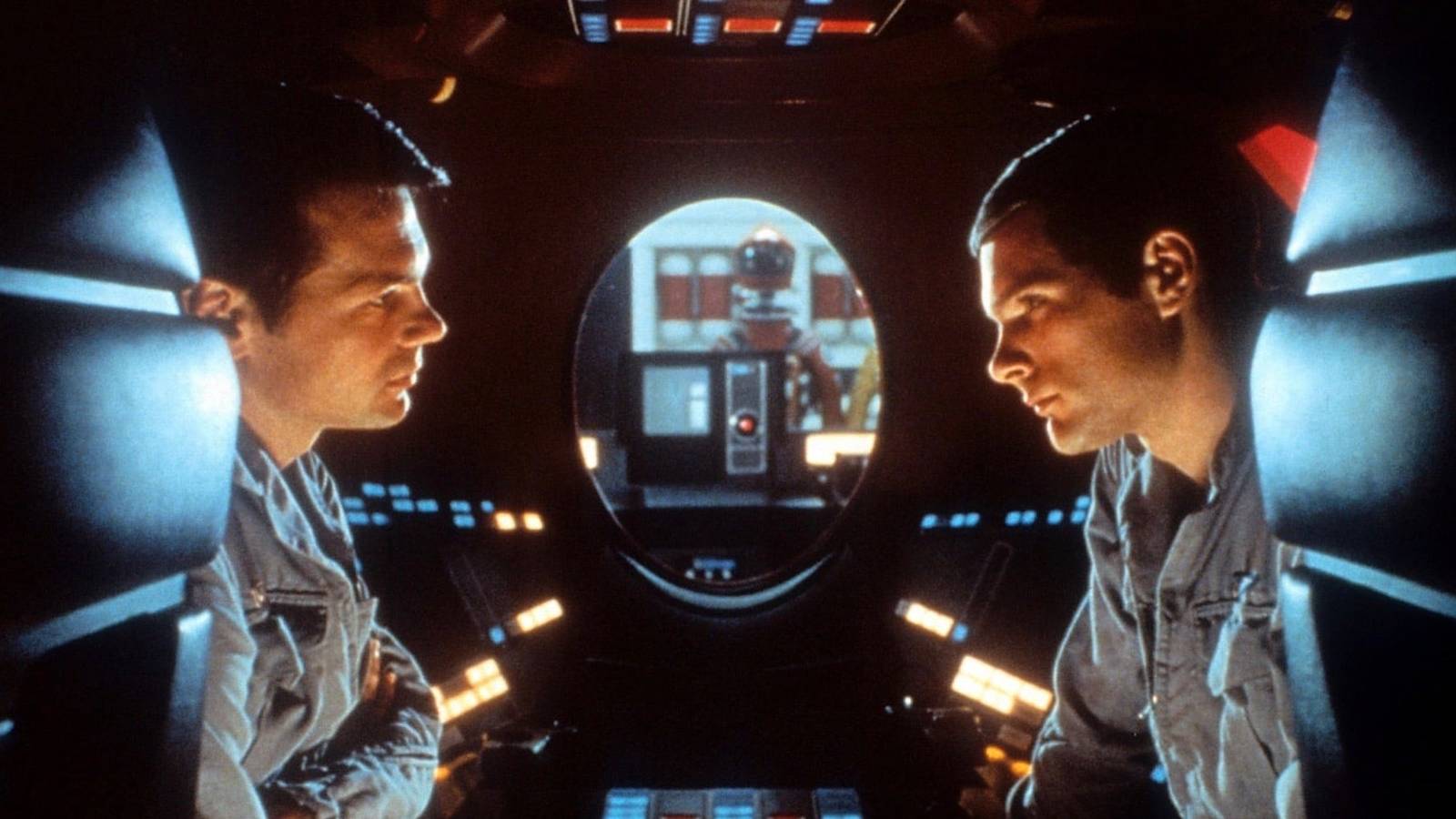
Science fiction has never been confined to one mood or one kind of story. It can be enormous and space-faring, intimate and unsettling, playful, philosophical, or frighteningly close to ordinary life. Across film history, the genre has given filmmakers a place to question technology, power, identity, war, progress, and the future of humanity. Its most memorable movies do more than predict what may come next. They reveal what audiences already fear, desire, or struggle to understand.
Choosing one standout science-fiction movie from every decade is therefore less about finding an uncontested winner than tracing how the genre keeps changing. Some selections became landmarks because of their visual ambition. Others endured because their ideas remain difficult to shake. Together, they show how science fiction moved from silent spectacle to modern blockbusters without losing its ability to surprise.
1920s: Metropolis



Fritz Lang’s Metropolis remains one of the defining visions of early cinematic science fiction. Its futuristic city is divided between wealthy citizens who enjoy comfort above ground and workers whose labor sustains the machines below. That central image gives the film a dramatic scale, but its concerns are surprisingly recognizable: industrial power, class inequality, mechanization, and the fear that human beings may become subordinate to the systems they create.
What makes Metropolis such an important starting point is the confidence of its world-building. The towering architecture, crowded machinery, and expressionistic imagery made the future feel both magnificent and oppressive. Even when viewed decades later, the film communicates its ideas visually rather than relying only on dialogue. Its influence can be felt in countless later depictions of futuristic cities, making it a natural choice for the decade in which science fiction cinema established much of its visual language.
1930s: Frankenstein


James Whale’s Frankenstein brought science fiction into the realm of horror while preserving the genre’s interest in discovery and consequence. The story’s scientist does not simply encounter a strange new world; he tries to manufacture life and then recoils from the result. That premise gives the film an enduring tension between curiosity and responsibility.
The movie’s power comes from its sympathy as much as its shock. The creature is presented as terrifying, but also as a being shaped by rejection and fear. The result is more complicated than a simple warning against scientific ambition. It asks what creators owe to what they bring into existence and whether society can condemn a misunderstood being before trying to understand it. That emotional dimension helped make Frankenstein far more durable than a conventional monster picture.
1940s: The Day the Earth Stood Still

The 1940s produced science fiction at a moment when anxieties about conflict and global destruction were impossible to ignore. The Day the Earth Stood Still turned those anxieties into a restrained encounter between humanity and an extraterrestrial visitor. Rather than presenting an alien invasion as a straightforward battle, the film uses the visitor’s arrival to examine the danger of human division and the consequences of treating advanced technology as a weapon.
Its lasting appeal comes from its seriousness. The movie does not need constant spectacle to create a sense of scale. A visitor from another world, a powerful guardian, and a warning directed at Earth are enough to make familiar streets feel suddenly fragile. The film helped establish a tradition in which science fiction could address political and moral questions directly while still functioning as accessible entertainment.
1950s: Invasion of the Body Snatchers



The 1950s were packed with stories about aliens, experiments, mutations, and atomic-age fears, but Invasion of the Body Snatchers remains especially effective because its threat is so difficult to identify. There is no distant planet to hide from and no obvious monster to defeat. Instead, people begin to suspect that those around them have been replaced by emotionless duplicates.
That premise works on several levels. It can be read as a story about conformity, political paranoia, social pressure, or the fear that modern life is draining people of their individuality. Its horror comes from uncertainty: the characters cannot easily tell whether their neighbors have changed or whether they are becoming paranoid themselves. By placing an extraordinary threat inside an ordinary community, the film demonstrated how science fiction could create suspense without abandoning psychological depth.
1960s: 2001: A Space Odyssey

Stanley Kubrick’s 2001: A Space Odyssey transformed the possibilities of the science-fiction film. Its approach is patient, visually exacting, and deliberately mysterious. Instead of explaining every event, it invites viewers to contemplate evolution, artificial intelligence, space travel, and humanity’s place in the universe.
The film’s controlled imagery and unusual pacing create an experience closer to a visual symphony than a conventional adventure. Its famous computer, HAL 9000, is unsettling not because it behaves like a cartoon villain, but because its calm voice and apparent logic make its decisions difficult to read. The movie also treats space as immense and indifferent, resisting the temptation to make the universe feel designed solely for human drama. More than half a century after its release, 2001 still feels less like an old prediction than an open question.
1970s: Star Wars


Science fiction became a defining force in popular cinema during the 1970s, and Star Wars became its clearest cultural event. The film combined space adventure, fantasy-like mythology, memorable characters, and groundbreaking effects into a story that felt both familiar and entirely new. Its appeal did not depend on technical concepts alone. It was built around friendship, courage, redemption, and the struggle against overwhelming power.
That balance explains why the movie reached audiences far beyond traditional science-fiction fans. It offered a vast galaxy without losing sight of a small group of emotionally accessible heroes. The visual effects made distant worlds and enormous spacecraft feel tangible, while the straightforward moral conflict gave the spectacle a timeless storybook quality. Star Wars showed that science fiction could dominate the mainstream without becoming cold or inaccessible.
1980s: Blade Runner


Where Star Wars made the future feel thrilling, Blade Runner made it feel exhausted, crowded, and morally uncertain. Its rain-soaked city is filled with advertising, artificial beings, corporate power, and people struggling to determine what counts as human. The film’s detective framework provides a route through that world, but its real subject is identity.
The replicants at the center of the story are designed to imitate human life, yet their experiences raise uncomfortable questions about memory, freedom, and mortality. The humans who pursue them are not automatically more compassionate or more deserving of sympathy. This uncertainty gives the film its haunting quality. Its production design also became one of the most influential images of a cinematic future: neon light, towering buildings, oppressive weather, and technology that has advanced without making life more humane.
1990s: The Matrix


The 1990s brought a wave of science fiction that explored digital reality and the growing presence of computers in everyday life. The Matrix turned those concerns into an energetic action film about a man who discovers that the world he knows is an elaborate artificial construct. Its central idea is immediately understandable while leaving room for larger philosophical questions about perception, control, and free will.
The movie’s impact also came from the way it presented action. Its choreography, visual effects, and distinctive sense of motion gave physical form to the idea that the rules of reality could be challenged. Yet the spectacle works because the emotional stakes remain clear. The protagonist is not merely learning how a machine system operates; he is deciding whether to accept an uncomfortable truth and take responsibility for what follows. That combination of accessible storytelling and ambitious concepts made the film a signature work of its decade.
2000s: Children of Men

Alfonso Cuarón’s Children of Men offers a more grounded and despairing vision of the future. Its world is defined by infertility, political instability, militarized borders, and a society that has lost confidence in its own continuation. The film’s science-fiction premise is striking, but its focus remains on ordinary people navigating a collapsing public life.
What distinguishes the movie is the way it turns social breakdown into an immediate human experience. Crowded streets, checkpoints, propaganda, and sudden violence make the future feel uncomfortably close rather than fantastically distant. At the center is a reluctant participant who is forced to protect a possibility of renewal. The film never treats hope as easy or guaranteed, which makes every moment of compassion feel hard-won. Its bleakness is balanced by a belief that individual choices still matter when institutions have failed.
2010s: Interstellar

Christopher Nolan’s Interstellar brought the grand scale of space exploration together with an intimate story about family and sacrifice. It imagines a humanity searching for a way to survive beyond Earth, but the emotional core is the bond between a parent and child separated by impossible distances and the effects of time.
The film is ambitious in its treatment of cosmic scale. Space is not simply a backdrop for action; it becomes a force that changes relationships, choices, and the meaning of a moment. At the same time, the movie remains accessible because its largest ideas are attached to recognizable emotions: fear of loss, longing for home, and the hope that future generations can inherit something better. Its combination of spectacle, sentiment, and scientific imagination made it one of the decade’s most prominent science-fiction achievements.
2020s: Dune: Part Two

The current decade has already produced several major science-fiction films, but Dune: Part Two stands out for the scale and seriousness of its adaptation. It expands a story of desert politics, religious belief, colonial power, and personal destiny into a cinematic experience that is both epic and deeply wary of hero worship.
The movie’s world feels carefully constructed, yet its concerns are not locked in an imaginary future. It examines how empires exploit resources, how prophecy can be used to influence populations, and how a charismatic leader may become dangerous even when he begins as an apparent liberator. Its action is enormous, but the film keeps returning to consequence. Victories carry costs, devotion can become fanaticism, and power rarely remains pure for long. That tension gives the movie a relevance beyond its spectacle.
Looking across these decades, the most striking pattern is the genre’s flexibility. Science fiction has used futuristic cities to discuss class, artificial life to explore responsibility, alien visitors to question human conflict, and space travel to examine love and survival. It has repeatedly changed its surface while preserving a central impulse: to hold a mirror to the present by imagining something unfamiliar.

That is why the best science-fiction films remain valuable long after their effects have aged or their predictions have missed the mark. Their importance does not depend on guessing the future perfectly. They endure because they make viewers reconsider the world they already inhabit. From Metropolis to Dune: Part Two, the genre’s greatest achievement is not simply showing what might exist someday. It is asking what kind of people we will become when that future arrives.