Why Louis Gossett Jr.’s Enemy Mine Became One of the 1980s’ Most Notorious Sci-Fi Flops
Louis Gossett Jr.’s performance as an alien in Enemy Mine became a cult favorite, but the ambitious 1985 science-fiction film struggled badly at the box office.
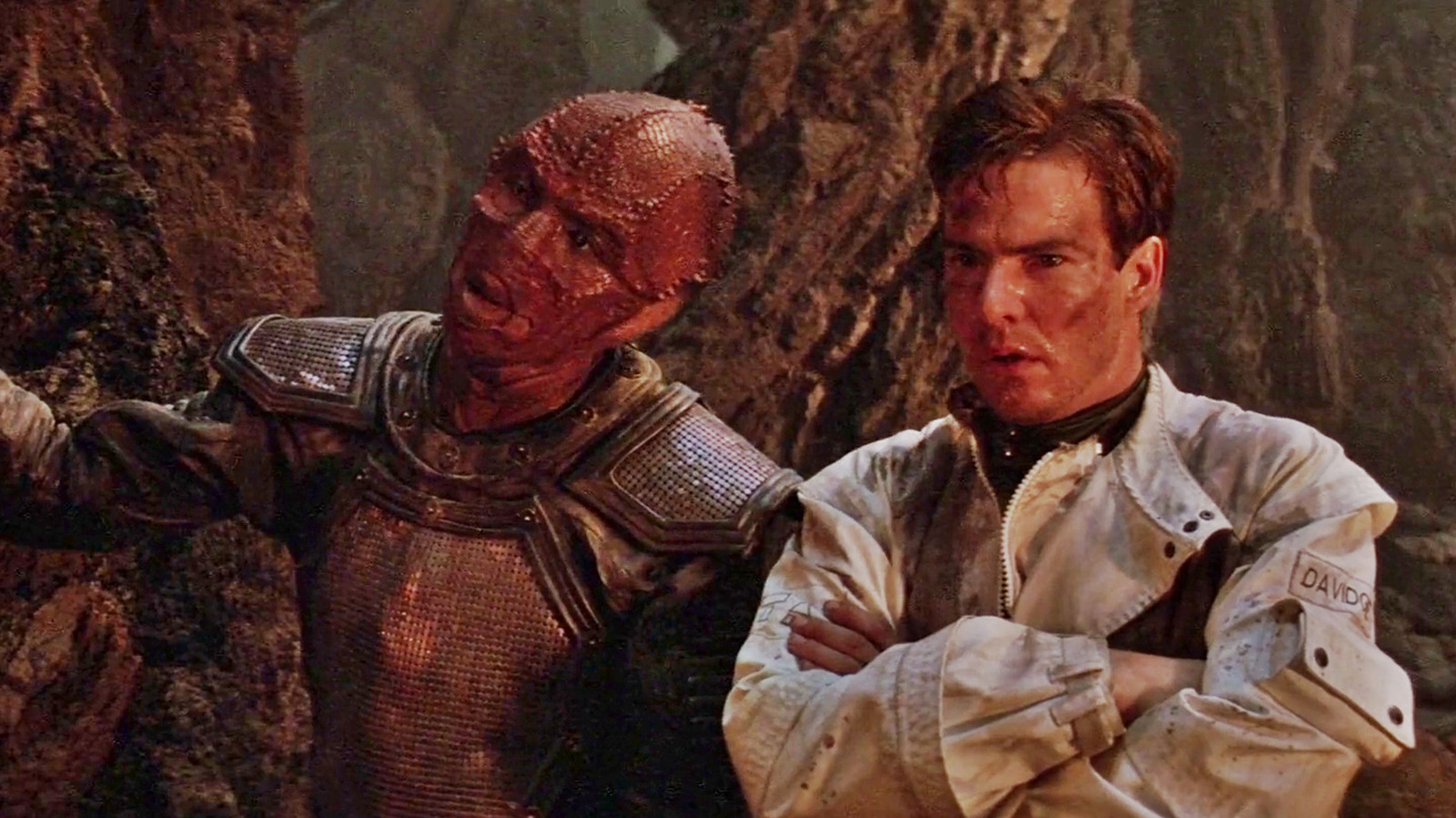
Louis Gossett Jr. is closely associated with one of science fiction’s most unusual performances: playing an alien warrior who is forced to depend on a human enemy. The film was Enemy Mine, a large-scale space adventure released in the middle of the 1980s science-fiction boom. Today, it is remembered by many viewers as an ambitious, emotionally direct cult movie. At the time, however, it was widely regarded as a major commercial disappointment.
The film arrived with many of the ingredients that might have suggested a hit. It had a respected actor in Gossett, a recognizable leading man in Dennis Quaid, an acclaimed director in Wolfgang Petersen and a story built around an easily understood high-concept premise. It also promised elaborate alien makeup, futuristic battles and the kind of visual spectacle audiences expected from a major science-fiction release. Those advantages were not enough to make Enemy Mine a box-office success.
In the film, Quaid plays Willis Davidge, a human fighter pilot involved in a brutal interstellar war. Gossett plays Jeriba Shigan, an alien soldier from the opposing Drac species. During a battle, the two pilots crash on an uninhabited planet. Their shared need to survive gradually overcomes their hatred, forcing them to cooperate despite the conflict that placed them on opposite sides.


That setup gives Enemy Mine a more intimate focus than its space-battle premise initially suggests. The movie begins as a war story, but it soon becomes a survival drama about two combatants trapped together in a hostile environment. Davidge and Jeriba must find food, shelter and protection from the planet’s dangers. Their relationship changes slowly, moving from fear and suspicion toward mutual respect and friendship.
Gossett’s role was especially demanding because much of the performance had to be delivered through extensive prosthetic makeup. Jeriba is not simply a human character with a different appearance. The Drac has a distinct physical form, manner of speaking and cultural background, requiring Gossett to communicate emotion while working under a heavy alien design. The performance had to make Jeriba feel like a believable person rather than a visual effect.
That work is a major reason the film has remained in conversations about memorable science-fiction acting. Gossett gives Jeriba a strong personality beneath the makeup, combining pride, irritation, humor and vulnerability. The character is initially presented as an enemy, but the performance steadily reveals the individual behind that label. The film’s central emotional argument depends on the audience accepting Jeriba as a complete person, and Gossett supplies much of that credibility.


The story also tries to expand the relationship beyond a simple partnership between stranded soldiers. As Davidge learns more about Drac customs, he begins to understand how completely propaganda and wartime fear have shaped his view of the enemy. Jeriba, meanwhile, has his own assumptions about humans. Their changing relationship becomes a statement about prejudice and the possibility of solidarity across cultural and biological differences.
On paper, that combination of spectacle and social commentary could have made Enemy Mine a major success. The 1980s had already demonstrated that science fiction could attract broad audiences when imaginative worlds were paired with strong character stories. Studios were investing heavily in futuristic adventures, and audiences were increasingly familiar with ambitious effects-driven productions. Enemy Mine appeared to be positioned to benefit from that trend.
Instead, the film faced serious difficulties before it even reached theaters. The production was expensive and complicated, with much of the story requiring remote-looking environments, elaborate sets and a convincing alien character. The movie also underwent major production changes, including a change in director during development. Such disruptions can create additional costs and make it harder for a project to establish a consistent tone.



By the time Enemy Mine was released in 1985, it reportedly carried a budget of roughly $29 million. That was a substantial investment for a film whose commercial prospects depended heavily on audiences embracing an unfamiliar alien world and a story that was more reflective than relentlessly action-oriented. The movie’s theatrical earnings were far below what would have been needed to justify that level of spending.
The result was an unfortunate box-office bomb. Rather than becoming a lasting theatrical franchise or a defining hit of the decade, Enemy Mine disappeared quickly from the commercial conversation. Its financial performance was particularly disappointing because the film had been designed as a major event rather than a modest genre experiment. The gap between its ambitions and its theatrical return became one of its defining stories.
Part of the problem may have been the film’s difficult marketing balance. Advertising a movie about space warfare could attract viewers looking for action, but Enemy Mine spends much of its running time exploring trust, loneliness and cultural understanding. Selling it primarily as a battle movie risked creating expectations the finished film did not entirely satisfy. Presenting it as a thoughtful character drama, meanwhile, may not have communicated the scale of the production to people looking for a traditional blockbuster.


The movie’s tone could also be challenging for a general audience. It moves from military conflict to survival adventure and then toward an openly sentimental examination of friendship and family. That mixture gives Enemy Mine its distinctive identity, but it may also have made the film harder to categorize. Commercial hits often offer viewers an immediately recognizable experience. Enemy Mine asks its audience to adjust as the story shifts from one genre mode to another.
Critical responses were similarly mixed. Some viewers appreciated the film’s central idea and Gossett’s commitment to the role, while others found the story overly earnest or uneven. The film’s effects and makeup were often treated as important elements of its appeal, but technical ambition alone could not overcome the sense that the production had struggled to bring its ideas together smoothly.
Still, a weak theatrical performance did not end Enemy Mine’s life. As it became available through home video and later television broadcasts, the movie found viewers who responded to its unusual premise and its emphasis on empathy. Films that fail to connect with audiences during an initial theatrical run can sometimes benefit from the slower pace of home viewing, where viewers have more time to appreciate atmosphere, performances and ideas that are not immediately commercial.
Enemy Mine’s later reputation is therefore more complicated than its box-office record suggests. It remains a flawed film, but its flaws are connected to the same ambition that makes it interesting. The production attempted to combine a war epic, an alien adventure and a parable about prejudice. It was not content to make Jeriba a conventional monster or a mysterious threat. Instead, it placed the alien at the emotional center of the story.
Gossett’s performance is also easier to appreciate when viewed separately from the film’s commercial history. The actor had already established himself as a powerful dramatic presence, and his work in Enemy Mine demonstrates how much expression can be conveyed through voice, movement and timing. Even when the makeup restricts ordinary facial communication, Gossett makes Jeriba’s reactions readable. The character’s physical presence is distinctive, but the performance never allows the design to become the entire point.
The partnership between Gossett and Quaid is essential to the film’s appeal. Davidge is not immediately transformed into a compassionate hero. He begins with deeply ingrained hostility toward the Drac and has to confront the consequences of that belief. Quaid plays the character’s resistance and gradual change directly, while Gossett gives Jeriba enough strength and independence to prevent the relationship from becoming one-sided. Their dynamic provides the film with its emotional structure.


The story’s anti-war message is straightforward, but that directness is part of the movie’s identity. Enemy Mine argues that conflict becomes easier to sustain when people are reduced to categories. The human and Drac forces define each other as enemies, making individual understanding almost impossible. The stranded pilots’ relationship challenges that logic by showing how quickly practical dependence can reveal shared needs and values.
That theme helped Enemy Mine remain relevant after its commercial failure, even if the movie never achieved the mainstream status of the era’s biggest science-fiction hits. It is frequently remembered alongside other ambitious genre films that struggled in theaters but developed loyal followings later. In that context, its failure becomes less a judgment on the entire film than a reminder that box-office results do not always determine a movie’s long-term cultural life.
For Louis Gossett Jr., Enemy Mine represents an unusual entry in a career that included celebrated dramatic roles as well as work in action, television and genre productions. The film gave him the rare opportunity to carry a major science-fiction story while hidden beneath an elaborate alien transformation. Although the movie itself was not a hit, Jeriba remains one of his most recognizable genre characters.



Enemy Mine was never the success its producers wanted, and its expensive production made the poor theatrical return especially painful. Yet the same qualities that made it a difficult sell in 1985 have helped preserve its appeal. It is strange, earnest and more interested in the possibility of understanding than in conventional victory. For audiences willing to look beyond its troubled history, the film offers a memorable performance from Gossett and a science-fiction story that values cooperation over conquest.