8 Most Violent Horror Movies of All Time, Ranked
From The Purge and Hostel to Saw III, Martyrs, and The Hills Have Eyes, these horror films are defined by their extreme brutality and unflinching approach to violence.
Violence has always occupied an uneasy place in horror cinema. It can create suspense, reveal character, establish a frightening world, or challenge an audience’s tolerance for what can be shown on screen. In some films, violence is brief and suggested rather than displayed. In others, it becomes the central language of the movie, shaping the story, the atmosphere, and the viewer’s entire experience.
The most violent horror movies are not necessarily the same as the scariest. Fear can come from silence, uncertainty, isolation, or the suggestion that something terrible is about to happen. Extreme horror takes a different route. It places the audience close to physical suffering and often refuses to offer an easy escape. The result can be shocking, disturbing, suspenseful, or, for some viewers, simply overwhelming.
This ranking brings together eight films associated with especially intense depictions of brutality. The selection includes mainstream studio horror, controversial international cinema, torture-focused thrillers, and movies that use graphic violence to create a broader social or psychological effect. Their methods differ, but each demonstrates how far the genre can push its audience.


8. The Purge
The Purge presents violence as a threat that can enter ordinary domestic life. Rather than placing its characters in a distant fantasy world or an isolated wilderness, the film builds tension around the idea that a seemingly protected home may not remain safe. That contrast between security and danger gives its violent moments additional force.
What makes The Purge effective in this context is the way it connects brutality with social breakdown. The violence is not treated only as the work of a single supernatural creature or a hidden killer. It is tied to people, institutions, fear, and the collapse of normal restrictions. The film’s premise turns an entire society into a potential source of danger, making the threat feel larger than any individual attack.

The movie also benefits from its enclosed setting. A house can usually represent comfort and protection in a horror story, but here that sense of safety is constantly tested. Every entrance, window, and dark corner becomes part of the suspense. The violence therefore works alongside the film’s themes, emphasizing how quickly familiar surroundings can become hostile.
7. The Hills Have Eyes
The Hills Have Eyes uses isolation to make violence feel unavoidable. Its characters are removed from the ordinary world and placed in an environment where help is distant and the rules of civilization have lost their power. That setting allows the movie to combine survival horror with sustained brutality.


The film’s violence is especially disturbing because it threatens a family group rather than a collection of anonymous victims. The audience is encouraged to see the characters as a unit, which makes every attack carry emotional consequences for the survivors. The horror is not limited to physical danger; it also involves the destruction of trust, safety, and family identity.
Another source of intensity is the movie’s clash between the people who believe they are prepared for danger and the forces confronting them. The characters begin with assumptions about control and security, but those assumptions quickly become unreliable. The violence exposes their vulnerability and forces them into a fight for survival that is far more personal than a conventional monster encounter.
6. Hostel


Hostel is closely associated with the modern torture-horror cycle because it makes physical pain a defining part of its premise. The film takes the fear of being trapped in an unfamiliar place and develops it into something much more severe. Travel, curiosity, and escape from routine are transformed into sources of danger.
The movie’s violence is designed to create dread before the worst events occur. The audience is made aware that something is wrong, but the characters do not immediately understand the full nature of the threat. That delay allows anxiety to build. Once the danger becomes clear, the film’s atmosphere changes from uneasy discovery to direct survival.
Hostel also stands out because its violence is connected to the idea of human beings treating suffering as entertainment or commerce. That concept makes the brutality feel more disturbing than a random attack. The horror comes from the deliberate organization of cruelty and from the implication that the victims are being denied any ordinary protection.


For many viewers, the film’s power comes from that combination of anticipation and graphic punishment. It is not simply violent for a few isolated moments. Its entire structure moves toward the fear of captivity, helplessness, and the loss of control over one’s own body.
5. Saw III
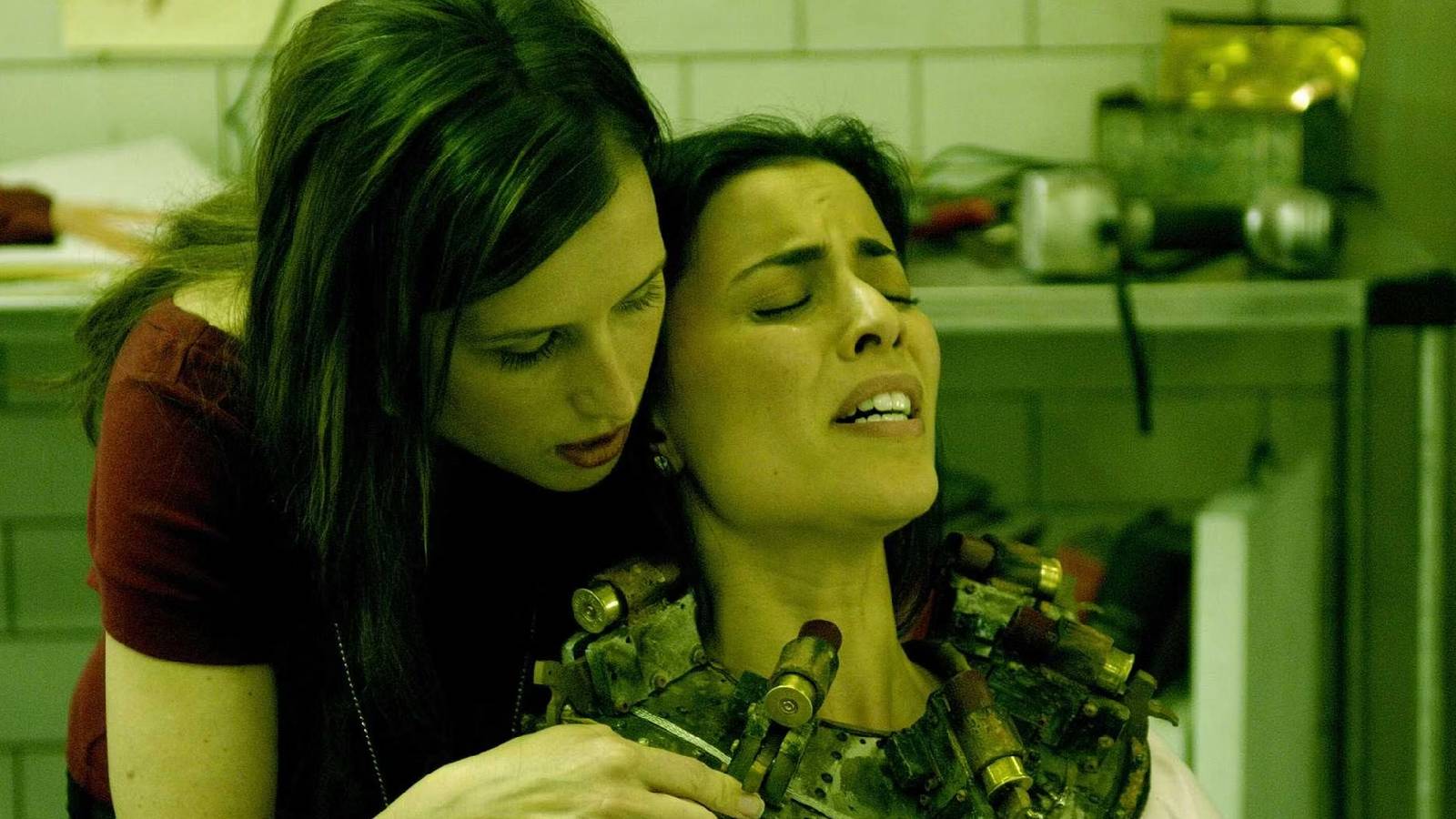
The Saw series is built around elaborate tests, moral choices, and physical danger, and Saw III represents one of the franchise’s most intense entries. Its violence is not presented as random chaos. Instead, it is arranged through mechanisms and challenges that force characters to confront pain while attempting to survive.


That structure gives the film a particular kind of tension. Viewers are not only waiting to see whether a character will escape; they are also watching the rules of each situation unfold. The horror comes from the combination of time pressure, difficult decisions, and the knowledge that every mistake may have severe consequences.
Saw III is also notable for the way it links physical violence with emotional distress. The characters are placed under pressure that affects their judgment and relationships, meaning the film’s most difficult moments are not purely mechanical. The tests carry psychological weight, and the surrounding story gives the brutality a sense of consequence beyond the immediate injury.
The film’s approach is therefore different from that of a traditional slasher. It focuses less on a killer appearing suddenly from the shadows and more on the prolonged experience of being trapped inside a cruel system. The viewer is asked to endure the same uncertainty as the characters: how the situation works, what it demands, and whether escape is possible.



4. The Remaining Entries
The full eight-film ranking extends beyond the titles most commonly associated with the list, including The Purge, Hostel, Saw III, Martyrs, and The Hills Have Eyes. Together, the selections demonstrate that extreme horror is not one clearly defined style. Some films derive their intensity from torture, while others focus on social collapse, survival, psychological suffering, or the vulnerability of ordinary people.
What connects the entries is their refusal to make violence feel harmless. In lighter horror, danger can function as a temporary obstacle before the characters return to safety. In the films gathered here, violence often changes the entire emotional landscape. Survivors may be physically damaged, psychologically transformed, or forced to question the values that once gave their lives structure.


The ranking also reflects the way audiences respond differently to graphic horror. A film that one viewer considers unbearably brutal may strike another as a carefully controlled genre exercise. Context matters. Violence can feel more severe when it is prolonged, when it affects sympathetic characters, when it occurs in a realistic setting, or when the film gives the audience time to anticipate it.
3. Martyrs
Martyrs is frequently discussed as one of the most demanding films in extreme horror. Its violence is not used merely for surprise or spectacle. The film treats suffering as part of a larger and deeply unsettling examination of trauma, belief, and the limits of human endurance.



That seriousness contributes to its reputation. The movie does not present brutality as an isolated sequence that can be easily separated from the rest of the story. Instead, violence is woven into the film’s identity and its questions about what people are willing to do to others, and what they may endure themselves.
Martyrs is also difficult because it creates a sustained sense of emotional pressure. The audience is not given a comfortable distance from the characters’ experiences. The film’s atmosphere remains grim and confrontational, making its violent content feel purposeful but no less disturbing.
For that reason, Martyrs occupies an important place in discussions of extreme cinema. Its reputation comes not only from what is shown, but from the way the material is framed. The film asks viewers to consider whether suffering can ever be justified by an idea or a promised revelation, while making that question increasingly difficult to watch.
2. Violence as a Horror Language
The films in this ranking show several ways that directors use violence to shape audience response. The Purge turns brutality into a social threat. The Hills Have Eyes uses it to destroy the illusion of safety. Hostel focuses on captivity and organized cruelty. Saw III transforms violence into a system of tests and consequences. Martyrs connects it to endurance and belief.
These differences matter because graphic imagery alone does not explain why one horror movie feels more intense than another. The surrounding story determines how the audience interprets what happens. A violent act can be shocking, tragic, suspenseful, grotesque, or ideologically provocative depending on the context established by the film.


Sound, editing, setting, and performance also influence the experience. A scene may become more difficult to watch when the camera remains close to the characters, when the action is extended, or when the film emphasizes reactions rather than spectacle. Conversely, rapid editing or stylized presentation can create distance, even when the implied event is severe.
This is why lists of the most violent horror movies are always subjective. They measure more than the amount of blood or the number of deaths. They also reflect how convincingly a film communicates pain, helplessness, fear, and the consequences of brutality.
1. The Most Extreme Horror Experiences
The films collected in this ranking remain memorable because they make violence central to the viewer’s experience. They do not all pursue the same goal, and they do not all use graphic content in the same way. Some are interested in social anxiety, some in survival, some in moral judgment, and some in the psychological effect of prolonged suffering.
That range is what makes the category more complicated than a simple contest to determine which film is the bloodiest. The strongest examples of violent horror use extremity to create a lasting response. They may frighten audiences, provoke debate, or push viewers to question why they continue watching after the material has become uncomfortable.
The Purge, Hostel, Saw III, Martyrs, and The Hills Have Eyes each approach brutality from a different direction, while the remaining entries broaden the list’s portrait of extreme horror. Ranked together, they illustrate the genre’s ability to turn violence into suspense, social commentary, psychological torment, and an examination of human endurance. For viewers seeking horror that does not look away from brutality, these films represent some of the most challenging experiences the genre has to offer.