X-Men: Evolution Returns in X-Men ’92: Incursions
Marvel is bringing the X-Men: Evolution version of the team into a collision with the familiar heroes of the 1990s in X-Men ’92: Incursions, a new story set before 2015’s Secret Wars.
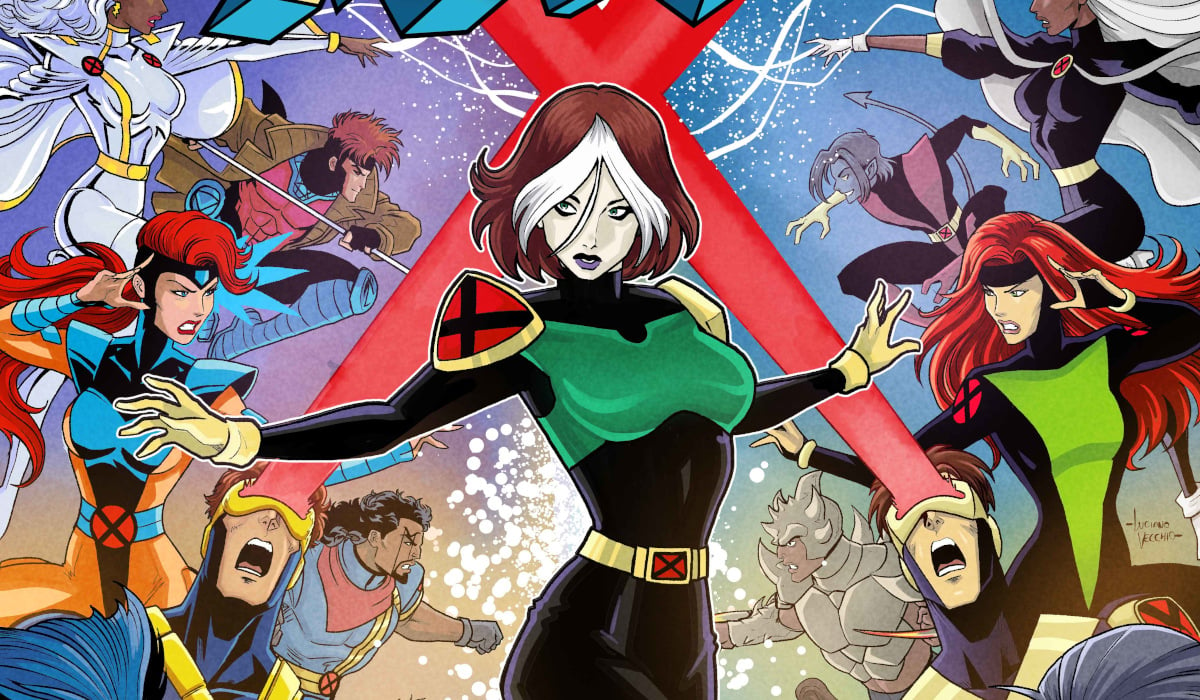
Marvel is preparing a meeting between two very different versions of one of its most recognizable superhero teams. X-Men ’92: Incursions will bring the cast and world associated with X-Men: Evolution into conflict with the X-Men of the 1990s. The project is scheduled for January and will take place before the events of 2015’s Secret Wars, placing the story inside the larger multiverse-driven history associated with Marvel’s comics.
The premise is immediately appealing because it connects two separate interpretations of the X-Men rather than simply revisiting one familiar lineup. X-Men: Evolution offered its own take on the team, while the ’90s version represents another distinct era and identity. Incursions will use that contrast as the foundation for a crossover, allowing the two groups to share a story while preserving the fact that they come from different versions of the franchise.
That distinction matters. The X-Men have been reimagined repeatedly across comics, animation, film and television, with each version making choices about the team’s personalities, relationships and place in the world. A crossover between the Evolution interpretation and the ’90s interpretation is therefore more than a reunion of recognizable names. It is a conversation between two creative visions of the same heroes.
:max_bytes(150000):strip_icc():focal(984x358:986x360)/Jessica-Jones-5-092326-974791ab7f9a417aa69f88cc3925a562.jpg)


The title points toward the kind of conflict readers can expect. In Marvel’s multiverse stories, an incursion generally suggests that separate realities are coming into dangerous contact. The announcement identifies the central confrontation clearly: the X-Men: Evolution team will battle their ’90s counterparts. Beyond that basic setup, the available details do not disclose the reason for the clash, the precise circumstances that bring the teams together or how the confrontation will be resolved.
Keeping those details undisclosed leaves room for the crossover to build its mystery around the meeting itself. Readers already understand the emotional hook. Each team is likely to regard itself as the legitimate version of the X-Men it knows, creating an immediate source of tension without requiring a conventional villain to explain why the heroes are fighting. The most compelling question may not be which team is stronger, but whether either group can recognize the other as a reflection of its own identity.
X-Men: Evolution is an especially notable choice for a return because that version of the franchise is remembered as a reinterpretation rather than a direct reproduction of the main comic-book status quo. Its place in the history of X-Men adaptations gives the new series a distinct reason to exist. Instead of using the label merely as a reference to the past, Incursions can place that version of the team at the center of a current multiverse story.


The ’90s side of the crossover carries a different kind of recognition. The title X-Men ’92 is closely associated with the era’s animated interpretation and with Marvel’s later efforts to explore that period in comics. Pairing it with X-Men: Evolution creates a deliberate contrast between two versions that many fans encountered through animation, but that do not represent the same continuity or creative approach.
That contrast gives the series a broad audience. Longtime readers may be drawn to the connections with Secret Wars and Marvel’s multiverse storytelling, while viewers who know the teams primarily from animated adaptations may respond to the simple pleasure of seeing those worlds meet. The story does not need readers to treat the two groups as interchangeable. In fact, the appeal depends on their differences being visible.
The crossover also offers an opportunity to explore what makes an X-Men team feel like the X-Men. Every incarnation is shaped by its own period, tone and storytelling priorities. The characters may occupy familiar roles, but those roles can change depending on the world around them. A leader may be defined by responsibility in one version and by uncertainty in another. Relationships can be closer, more distant or entirely reconfigured. When the teams meet, those changes become part of the drama.


Marvel’s decision to set Incursions before 2015’s Secret Wars provides an important piece of its framework. Secret Wars is widely associated with a major collision of Marvel realities, making the placement of this story significant even for readers who have not followed every multiverse event. The new series will not simply be presented as an isolated encounter without a larger point of reference. Its position before Secret Wars indicates that it belongs to a period when the boundaries between realities are especially relevant.
That setting may also help the book balance familiarity with discovery. Readers know that the story leads into an established Marvel event, but the announcement does not reveal how directly the crossover will connect to that event. The series can therefore use the impending multiversal instability as background while keeping its attention on the two teams and the immediate danger created by their encounter.
The word “incursions” carries a built-in sense of urgency. Two realities are not merely visiting one another; their contact threatens to become destructive. That makes the battle between the teams potentially more complicated than a standard misunderstanding between heroes. If the worlds themselves are at risk, cooperation may eventually become necessary, even if the groups begin by treating each other as enemies.
At the same time, the source information confirms only the broad shape of the story. There is no announced explanation for which reality is responsible for the incursion, whether one team has crossed over intentionally or which characters will take the lead. The lack of those specifics makes it too early to assign motives or predict the ending. What is certain is the central premise: the Evolution-era X-Men and their ’90s counterparts will be placed on opposite sides of a conflict.
That simplicity is part of the project’s strength. The X-Men have always supported stories about difference, misunderstanding and the difficulty of finding common ground. A multiverse crossover turns those themes inward. Instead of asking humans and mutants to understand one another, Incursions can ask one group of X-Men to understand another group that looks familiar but has been shaped by a different reality.
The idea also fits naturally with the way superhero comics revisit their own history. Marvel can return to recognizable versions of its characters without undoing the stories that originally defined them. The Evolution team does not need to replace the ’90s team, and the ’90s team does not need to overwrite Evolution. Their meeting can acknowledge both interpretations as valid parts of the franchise’s larger imaginative landscape.

For general audiences, the premise can be understood without detailed knowledge of multiverse continuity. At its core, this is a story about two versions of the X-Men encountering one another and fighting before the danger surrounding their realities forces the situation to change. The Secret Wars placement adds continuity context, but the emotional engine remains straightforward: heroes who should be allies are confronted with versions of themselves that they may not recognize.
For established fans, the appeal will likely come from the details that emerge when the teams are finally placed side by side. Their visual identities, team dynamics and assumptions about one another can all become sources of conflict. Even a familiar conversation can carry new weight when it is spoken by an alternate version of a character. The crossover invites readers to compare not only the heroes, but also the worlds that produced them.
January’s release gives Marvel a chance to start the year with a project built around recognition and surprise. The title announces the returning Evolution interpretation, while the crossover format promises a meeting that has not previously been the central focus of the series. Because the available announcement remains focused on the premise, details such as the creative team, issue count and full cast have not been provided here.



That means the most important information currently available is also the clearest. X-Men ’92: Incursions will feature the X-Men: Evolution team, pit them against the X-Men of the 1990s and place the story before Secret Wars. Those elements establish a multiversal conflict with strong nostalgic appeal, while leaving the story’s specific twists open for future announcements.
Whether the teams begin as rivals, remain divided or discover a common threat, the crossover has a powerful question at its center: what does it mean to be the X-Men when another reality has produced a team that claims the same legacy? Incursions will have the chance to answer that question through action, humor and disagreement, but its most lasting effect may come from allowing two beloved interpretations to stand together in the same Marvel story.
With its January arrival, X-Men ’92: Incursions is positioned as both a return and a collision. It returns to the world of X-Men: Evolution, revisits the ’90s identity of the team and connects both to the multiverse landscape that existed before Secret Wars. The result is a crossover designed to celebrate the franchise’s many forms while giving those forms a reason to challenge one another.
