Joshua Cassara, Artist of X-Force and X-Men, Dies at 46
Joshua Cassara, whose work helped define Marvel’s Krakoa-era X-Force and X-Men comics, has died at 46 from heart complications.
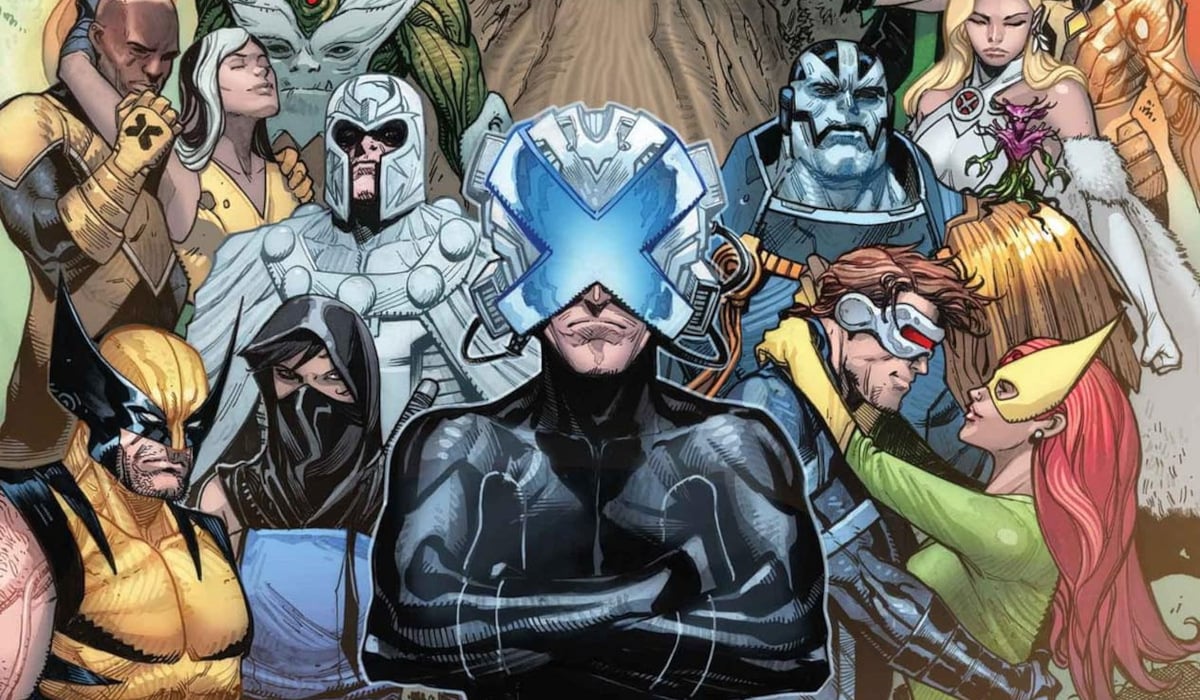
Joshua Cassara, the comic-book artist best known for his work on Marvel’s X-Force and X-Men titles during the Krakoa era, has died at the age of 46. According to reports, Cassara died from heart complications.
His death marks the loss of a major artistic voice from one of the most closely watched periods in modern X-Men history. For readers, Cassara’s pages were part of the visual identity of a changing mutant world: one built around new political structures, uneasy alliances and the constant threat of violence. His work appeared during a period when Marvel placed the X-Men and their related characters at the center of a broad publishing initiative, giving artists an important role in defining how that transformed setting looked and felt.
Cassara was particularly associated with X-Force, a series that required a different visual language from many traditional superhero books. The title’s identity is rooted in covert operations, dangerous missions and characters who often exist in morally complicated territory. That setting demanded artwork capable of communicating both the scale of superhero action and the tension of work carried out beyond public view. Cassara became closely linked with that tone, helping make the series one of the recognizable artistic components of the Krakoa-era line.



He also worked on X-Men, placing him among the artists responsible for presenting Marvel’s mutant characters to a wide audience during a significant stage in their publishing history. The two assignments gave Cassara an opportunity to draw characters and situations ranging from ensemble superhero conflict to more focused, mission-driven storytelling. Together, those projects formed the foundation of his reputation among contemporary X-Men readers.
The Krakoa era was notable for the way it reimagined the status of mutants in the Marvel Universe. Rather than treating them only as a persecuted minority scattered across the world, the stories presented them through the framework of a collective society with its own ambitions and internal pressures. That shift affected every part of the books, including their visual presentation. Artists were asked to show both the promise of a new beginning and the danger surrounding it, often within the same sequence.
Cassara’s work belonged to that visual conversation. His contribution was not simply a matter of illustrating individual scenes. In long-running superhero comics, the artist helps establish how readers understand a cast, a setting and the emotional temperature of a story. Costumes, expressions, body language and the arrangement of a page all influence whether a scene feels triumphant, threatening or intimate. Cassara’s work on the X-Men line became part of the way readers experienced the era week after week and issue after issue.


That connection is especially meaningful in a franchise as longstanding as the X-Men. The characters have been interpreted by many generations of artists, and each era leaves behind a distinct visual memory. Readers may remember a particular storyline for its plot, but they often remember it just as strongly through the faces, poses and action sequences that brought it to life. Cassara’s pages will remain associated with the period in which Marvel’s mutant stories were undergoing one of their most substantial modern transformations.
His work on X-Force also reflected the unusual demands of a team book whose stories could be more severe in tone. The series occupied a place within the larger X-Men publishing program while maintaining its own identity. Its characters operated under pressures that made trust difficult and consequences unavoidable. Artwork for such stories must keep the action readable without losing the sense of risk, and it must make a large cast distinguishable even when the pace is intense. Cassara’s role in the series helped give those stories a consistent visual presence.
For general readers who may know the X-Men primarily from film, television or older comics, Cassara’s importance can be understood through the way monthly comic artists shape a serialized universe. A single issue may contain dozens of visual decisions, from the design of a location to the smallest reaction in a character’s face. Those decisions are repeated across multiple chapters and become part of the reader’s understanding of the world. When an artist is closely associated with a major storyline, their style becomes inseparable from the story itself.


Cassara’s passing is therefore being felt not only as the death of a working artist but also as the end of a creative contribution that many readers encountered during a defining Marvel publishing period. At 46, he leaves behind work created during a career that had already made a clear mark on one of the company’s most important franchises. The available report identifies heart complications as the cause of death.
News of a comic-book creator’s death can reach readers with unusual force because the relationship between audience and artist is built over time. A writer or artist may be encountered first through a single issue, then followed across a series as the reader becomes familiar with the way that person handles particular characters. In Cassara’s case, readers saw his work in stories involving some of Marvel’s most established heroes and villains, but also in a period when those characters were being presented within a newly altered status quo.
That setting made visual continuity especially important. The Krakoa-era X-Men books were not isolated publications; they formed part of a larger network of stories connected by shared characters, events and ideas. Artists working across that line helped maintain a recognizable sense of place while allowing each title to retain its own personality. Cassara’s work on X-Force and X-Men placed him within that interconnected creative effort.


There is also a physical intensity to superhero illustration that can be easy to overlook. Finished comic pages are the result of multiple stages of labor, including drawing, composition, character acting and action choreography. Readers may move through a page in seconds, but every panel must guide the eye and communicate information clearly. In team comics, the challenge grows because the artist must balance many figures without allowing the scene to become confusing. The impact of Cassara’s work can be measured in part by how naturally those pages carried readers through complicated stories.
His association with X-Force is likely to remain the central part of his public legacy. The title has always occupied a distinctive place within the X-Men family, and its Krakoa-era incarnation carried the added weight of representing a society that claimed to have built a new future while still relying on people willing to undertake dangerous work. That contradiction gave the series a particular dramatic tension. Cassara’s artwork helped translate that tension into images that could be immediate, forceful and unsettling.
His work on X-Men broadened that legacy. The main X-Men title carries expectations that extend beyond any one storyline or team lineup. It must present the franchise’s larger themes while giving individual characters room to stand out. Drawing the series means engaging with a visual history that includes decades of interpretations, and every artist adds another layer to that history. Cassara’s contribution belongs to the modern layer shaped by the Krakoa era.


For many readers, the value of a comic artist’s work becomes clearest after a story has ended. Specific pages return to memory: a character’s first appearance in a new costume, a group assembled before a mission, a moment of hesitation before violence, or a quiet exchange placed between larger confrontations. Those memories are rarely separated from the art that delivered them. Cassara’s pages will continue to be revisited in that way by readers who discovered his work through the X-Men books.
The report of his death also serves as a reminder of how young many comic creators are when compared with the full span of the industry’s history. Cassara was 46, an age at which many artists are still building new collaborations and taking on new interpretations of familiar characters. His passing cuts short a career that had already reached a prominent place but still held the possibility of many more projects.
Because the supplied report centers on his death and his work on the Krakoa-era X-Force and X-Men titles, further details about his personal life, other professional credits and memorial arrangements should be treated carefully unless confirmed by his family, representatives or additional reliable sources. What is clear is the significance of the work for which he was known and the fact that his death came from heart complications.

Marvel’s mutant comics have always depended on the combined efforts of writers, artists, colorists, letterers, editors and many other professionals. A major era is never created by one person alone, yet individual artists can leave an unmistakable impression on it. Cassara was one of those artists. Through his work on X-Force and X-Men, he helped give a visual form to stories about survival, identity, power and the uncertain promise of a new beginning.
Readers returning to those issues will find more than familiar characters and remembered plotlines. They will find the choices of an artist who helped determine how that world appeared on the page. Those choices are now part of the permanent record of the X-Men’s Krakoa era, preserving Joshua Cassara’s contribution for the audience that followed his work and for future readers discovering it for the first time.