The Forgotten Blade TV Series That Followed Wesley Snipes’ Marvel Movies
Before Marvel’s television universe became a major part of pop culture, Blade received a short-lived small-screen continuation that has largely disappeared from public memory.
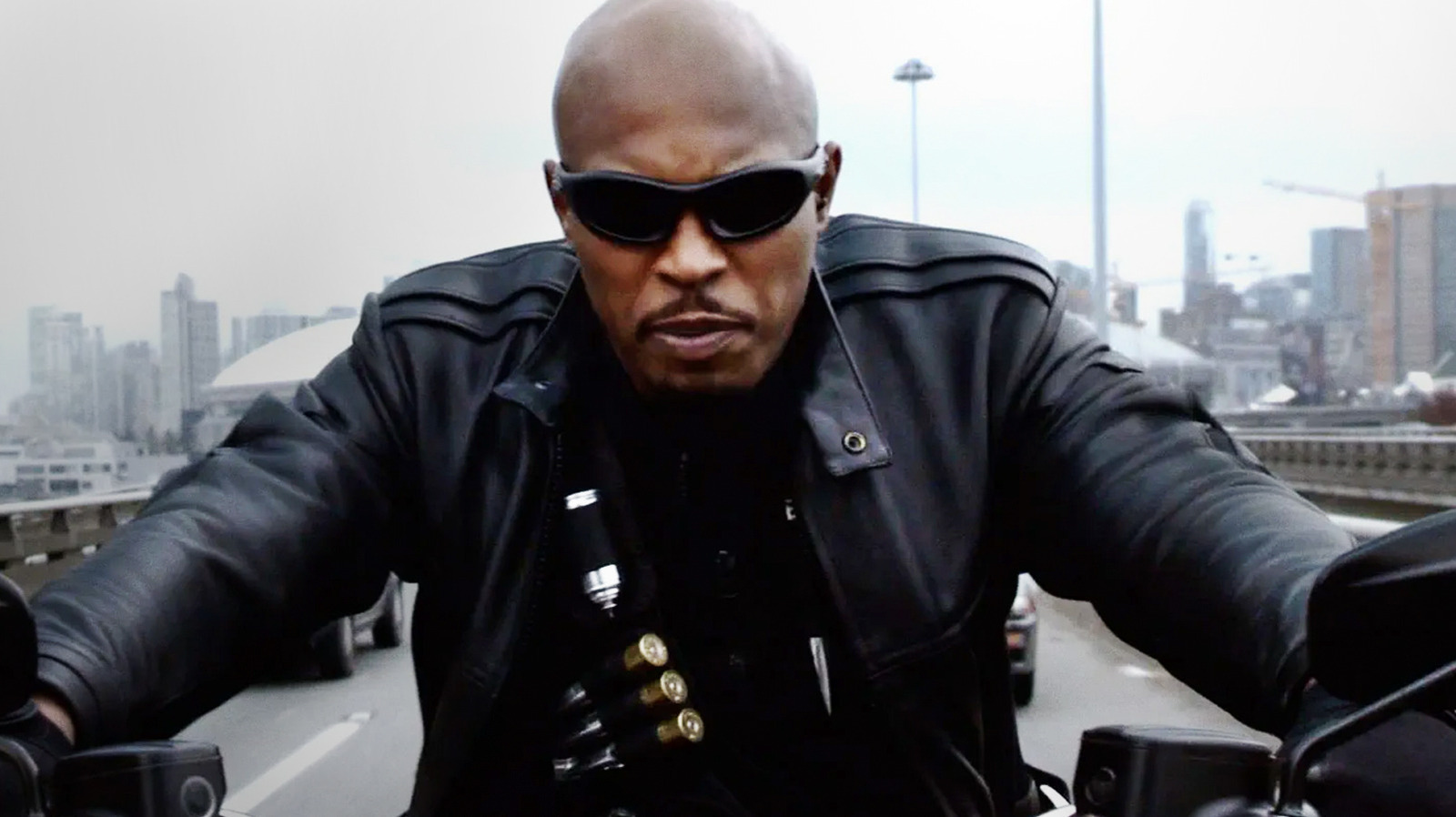
Long before Marvel television became a familiar part of the entertainment landscape, one of the company’s most recognizable screen heroes made an unexpected move to the small screen. Following the success of Wesley Snipes’ Blade movies, the vampire hunter returned in a television series that attempted to continue the character’s story while giving him a new face, a new setting, and a longer-running adventure.
That show was Blade: The Series, a short-lived production that premiered in the mid-2000s and has gradually faded from the wider conversation about Marvel adaptations. It arrived during a very different era for superhero entertainment. There was no Marvel Cinematic Universe tying films and television programs together, comic-book adaptations were still treated as individual experiments, and a cable series built around a violent vampire hunter seemed like a much stranger proposition than it might today.
The result was an intriguing but brief continuation of the Blade concept. It did not become a lasting television franchise, and it never approached the cultural footprint of the films that inspired it. Even so, the series represents an important moment in Marvel’s screen history. It showed that a superhero character could be moved from a theatrical franchise to television without being completely redesigned, while also demonstrating how difficult it was to preserve a film property’s identity when the central star was no longer involved.
The Blade movies had already established a distinctive tone before the television series appeared. They mixed supernatural horror, action cinema, martial arts, comic-book mythology, and a distinctly adult level of violence. Wesley Snipes’ performance gave the character a controlled, intimidating presence. His Blade was not a bright-costumed traditional superhero. He was a solitary hunter who operated in the shadows, carried a deep personal connection to the vampire world, and treated his mission as both a responsibility and a curse.
That identity made Blade a particularly unusual candidate for television. The character’s appeal depended heavily on atmosphere and physical performance, but a weekly series needed more than a succession of action scenes. It needed supporting characters, recurring enemies, and a larger mythology that could develop over time. The television version therefore had to expand Blade’s world rather than simply recreate the structure of the movies on a smaller budget.
One of the most obvious changes was the actor playing Blade. Snipes did not return for the series, and the role went to rapper and actor Kirk “Sticky Fingaz” Jones. Recasting an established film character is always risky, particularly when the original performance is closely associated with the property. Viewers had already come to identify Blade’s voice, mannerisms, and physical presence with Snipes, so the series had to persuade audiences that this was still the same character rather than an unrelated interpretation with a familiar name.


Sticky Fingaz approached the role with a harder, more openly aggressive style. His version of Blade was younger in energy and often more visibly volatile. That difference could be jarring for viewers expecting a direct continuation of the movie performance, but it also allowed the series to establish its own rhythm. The television Blade was still a relentless vampire hunter, yet the show placed greater emphasis on his investigations, alliances, and personal connections.
The series also introduced a new viewpoint character in Krista Starr, played by Jill Wagner. Krista becomes involved in the hidden conflict between humans and vampires after a personal tragedy draws her into Blade’s world. Through her, the audience is given an entry point into the mythology. She is not initially a seasoned hunter or a specialist in supernatural lore, which makes her discovery of the vampire underworld easier for general viewers to follow.
Krista’s presence also gave the show a story engine that differed from the films. Blade could travel from one confrontation to another, but Krista’s investigation created an ongoing mystery. Her search pushed the narrative toward questions about vampire organizations, hidden power structures, and the people working to control them. That structure helped the series function as a television drama instead of a collection of loosely connected monster-hunting episodes.


The principal threat came from the vampire world itself, especially the ambitious figure of Marcus Van Sciver. Played by Neil Jackson, Marcus was not presented as a simple creature waiting to be defeated. He was a powerful and calculating member of vampire society, with influence, wealth, and a long-term interest in reshaping the balance between humans and vampires. His presence gave Blade an enemy who could operate through manipulation and politics as well as direct violence.
This expansion of the vampire hierarchy was one of the show’s more distinctive ideas. The movies had already suggested that vampires possessed their own social order, traditions, and internal rivalries, but the series had more time to explore those elements. It portrayed the supernatural conflict as an organized struggle involving competing factions, scientific experimentation, personal ambition, and disputes over the future of the vampire species.
That wider mythology was useful because it gave the writers material that could support a season rather than a single film. Blade was not merely tracking individual vampires through dark city streets. He was also uncovering how the enemy operated and learning that the threat could not always be defeated by finding the most dangerous creature in the room and killing it. The show’s strongest ideas came from this tension between Blade’s direct approach and the complicated system surrounding him.


Blade: The Series premiered on Spike TV in 2006. The network was still working to define itself, and the program fit its interest in action-oriented, adult entertainment. A Blade series made sense for the channel on paper: the character already had name recognition, the property came with a built-in audience, and the darker material was more compatible with cable television than with many traditional broadcast networks.
The series received a season consisting of 13 episodes. That gave it enough room to introduce its characters and develop an ongoing storyline, but not enough time to become deeply established. The program ended after that initial run, leaving it as a curious one-season chapter in the character’s screen history. It was not a long-running cult institution on the level of some other genre shows, and it never received the opportunity to expand its mythology across multiple seasons.
Its short life can be understood partly through the challenges facing any continuation that changes the lead actor. Audiences who connected Blade with Snipes had to make an immediate adjustment. At the same time, viewers unfamiliar with the movies needed a version of the character that could stand on its own. The series occupied an uncomfortable middle ground: it was linked closely enough to the films to invite comparison, but different enough that it could not simply rely on nostalgia.


There was also the practical problem of translating a theatrical action property to television. The movies had the scale and resources to present elaborate fights, visual effects, and cinematic set pieces. A weekly cable production had to be more selective. The show still featured combat and supernatural violence, but its storytelling naturally leaned more heavily on dialogue, investigation, recurring locations, and character relationships. For some viewers, that made the program feel like a genuine expansion of Blade’s world. For others, it made the series seem less powerful than the movies it followed.
The timing was significant as well. In the mid-2000s, television was becoming increasingly comfortable with serialized genre storytelling, but the modern superhero television boom had not yet arrived. Audiences had not been trained to expect every comic-book character to receive an interconnected streaming series, elaborate season arcs, and carefully coordinated spin-offs. A show such as Blade: The Series was still something of a gamble rather than one piece of a massive corporate plan.
That historical context helps explain why the series is easy to overlook today. Marvel adaptations are now discussed as part of a huge, interconnected screen legacy. The Blade movies occupy an important place in that history because they helped demonstrate that comic-book films could succeed with a darker, more mature tone. The television series followed them, but it did not become part of a larger chain of productions. Without later films or shows constantly reminding audiences that it existed, it gradually slipped out of the mainstream conversation.

Its disappearance is also connected to the way superhero franchises are remembered. Viewers tend to group characters around their most successful or most visible portrayals. For Blade, that means the conversation usually returns to the Wesley Snipes films, the character’s comic-book origins, or the later plans for a new Marvel Studios movie. A single-season television adaptation starring a different actor has less cultural weight, even when it contains ideas that are worth revisiting.
Still, the show should not be dismissed simply because it was brief. Its existence reveals how strongly the original Blade movies had established the character. A television network believed the vampire hunter could carry a continuing story, and the production attempted to build a broader world around him rather than merely repeat one film’s formula. It also anticipated a later trend in which genre adaptations would use television to explore supporting characters, criminal networks, mythology, and long-form conflicts that a two-hour movie could only suggest.
For viewers approaching it now, the most useful way to see Blade: The Series is not as a replacement for the movies. It is better understood as an alternate continuation of the same broad concept. The recasting, different pacing, and television budget create a noticeably different experience, but those differences are part of what makes the show an interesting artifact. It captures a moment when comic-book television was still experimenting with how much of a film franchise could survive outside the cinema.


The series also offers a reminder that Marvel’s screen history contains more forgotten experiments than its current reputation might suggest. Before every new adaptation became a major event, characters could receive one-season shows that arrived with modest promotion, found a limited audience, and disappeared when the network moved on. Some were flawed, some were ambitious, and many were simply overtaken by newer versions of the same heroes.
Blade: The Series belongs firmly in that overlooked category. It followed a successful Marvel movie franchise, recast one of the company’s most recognizable antiheroes, and tried to turn his battle against vampires into an ongoing television saga. The attempt lasted only a short time, but it remains a notable footnote: a reminder that Blade once had a small-screen life of his own, long before the current age of superhero universes made such a project seem inevitable.