Marvel Sets X-Men ’92 Against X-Men: Evolution in New Incursions One-Shot
Marvel is bringing two animated-inspired versions of the X-Men into conflict in X-Men ’92 Vs X-Men: Evolution, part of the publisher’s wider Incursions storyline leading toward Avengers: Doomsday.

Marvel is putting two beloved versions of its mutant heroes on a collision course. Alongside its broader Incursions publishing initiative, the company is preparing X-Men ’92 Vs X-Men: Evolution, a one-shot built around the meeting—and apparent confrontation—of the X-Men associated with two different animated eras.
The announcement places the special in the same publishing landscape as Avengers: Doomsday. That connection gives the project an importance beyond a simple nostalgia-driven crossover. Marvel is using the Incursions concept to bring separate realities, timelines, or versions of familiar characters into the same story space, and this particular one-shot appears designed to show what happens when two recognizable interpretations of the X-Men are forced to share the page.
At this stage, the central idea is clear while many of the story’s details remain under wraps. Marvel has identified the project as an encounter between the cast associated with X-Men ’92 and the characters associated with X-Men: Evolution. The publisher has also positioned it among the Incursions one-shots being released in the run-up to Avengers: Doomsday. Beyond that core premise, readers will have to wait for further information about the creative team, the exact cause of the conflict, and the consequences of the meeting.


That restraint is understandable. The appeal of a story such as this depends heavily on the surprise of seeing two familiar worlds collide. Both X-Men ’92 and X-Men: Evolution are linked to animated interpretations of Marvel’s mutant mythology, but they represent different approaches to the characters and to the kind of stories the franchise can tell. Bringing them together offers Marvel a way to explore those differences without replacing one version with the other.
X-Men ’92 immediately evokes the animated world that introduced many viewers to the mutant team through the celebrated 1990s television era. The title also carries the suggestion of a comic-book continuation or expansion of that sensibility: a colorful ensemble, recognizable costumes, dramatic super-powered conflicts, and an emphasis on the large cast that has always defined the X-Men. The name alone is enough to signal a particular tone and period to longtime fans.
X-Men: Evolution, meanwhile, points to a different animated interpretation. That series approached the characters through a younger, more contemporary framework, with the heroes often presented as students learning to manage their powers, their identities, and the pressures of adolescence. Its version of the X-Men had its own visual language, character dynamics, and relationship to the world around them. A crossover between the two therefore has an immediate source of tension even before any villain or cosmic threat enters the picture.

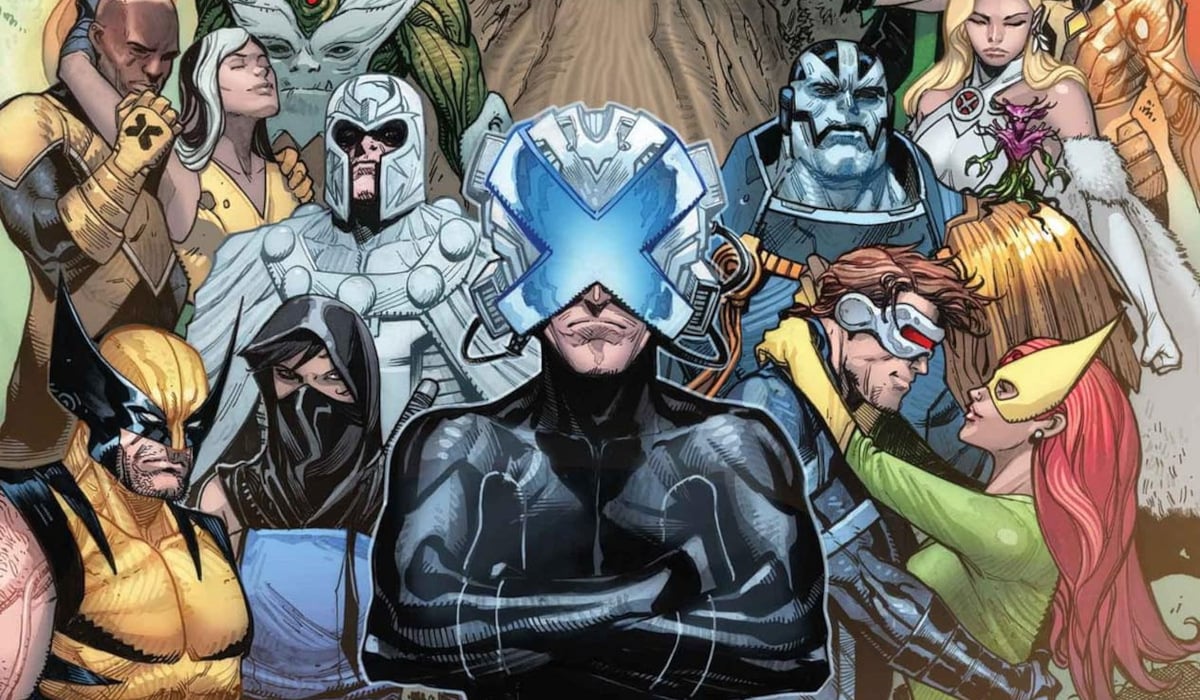

The contrast between those identities is likely to be central to the one-shot’s appeal. The project does not merely place two groups of similarly named heroes in the same setting. It brings together versions shaped by different storytelling priorities. One side is associated with the bold, serialized superhero drama of the 1990s; the other is associated with a younger cast and a more school-centered interpretation of mutant life. The encounter can function as a battle, but it can also serve as a conversation between two generations of X-Men storytelling.
Marvel’s choice to present the idea as a “Vs.” story naturally raises questions about how the conflict begins. The title establishes opposition, yet it does not confirm whether the teams are enemies for the entire issue or whether they are pushed into fighting by circumstances they do not understand. The Incursions framework provides a broad explanation for why separate realities might come into contact, but the available announcement does not reveal the specific mechanism at work in this case.
That distinction matters because the word “incursion” has a built-in sense of danger. It suggests that one reality may overlap with, intrude upon, or threaten another. Such a premise can turn a meeting between alternate versions of the X-Men into an urgent problem rather than a casual crossover. If two worlds cannot safely occupy the same space, cooperation may become just as important as combat. The basic setup allows for a story in which the heroes must first overcome their suspicion of one another before they can address the larger threat.

The project’s relationship with Avengers: Doomsday adds another layer of anticipation. Marvel has described the X-Men special as part of the same Incursions group of one-shots connected to that larger event. This means readers are being invited to view the individual specials as pieces of a wider publishing plan. The X-Men story may stand on its own, but its placement suggests that the collision between these animated-inspired teams is relevant to the larger multiversal situation surrounding the Avengers title.
It is important, however, not to assume more than Marvel has confirmed. The announcement does not provide a complete plot synopsis, identify every character who will appear, or explain precisely how the special will affect Avengers: Doomsday. It also does not establish whether the X-Men ’92 and X-Men: Evolution versions will continue into future stories after this meeting. Those questions are likely to become part of the promotion as the comic moves closer to release, but they remain unanswered for now.
That uncertainty leaves room for the crossover to surprise readers. A project built from familiar animated properties could easily become a straightforward battle between teams, but the Incursions setting gives it more possibilities. The characters might initially mistake one another for impostors. They might discover that their worlds have been altered by the same force. They might be forced to decide which reality can survive, or whether the premise of the Incursion can be undone without sacrificing either world. None of those outcomes has been confirmed, but the title and the event connection create space for each kind of story.


For general audiences, the appeal is easy to understand even without detailed knowledge of Marvel’s multiverse. Many comic-book heroes have been reimagined across different television series, films, and comic-book continuities. Each adaptation can retain the same names and powers while giving the characters different ages, personalities, relationships, and histories. A crossover makes those variations visible. It allows readers to compare the teams directly while recognizing what remains consistent about the X-Men: their powers may set them apart, but their struggles with identity, acceptance, and responsibility continue to define them.
The format of a one-shot may also be well suited to the idea. A single issue can deliver an immediate encounter without requiring readers to commit to a long-running series first. It can introduce the Incursions concept through a focused story and give each version of the team a clear role. At the same time, its connection to the larger Avengers: Doomsday initiative gives the issue a place within a broader Marvel conversation about alternate realities and converging worlds.
For longtime fans, the project’s strongest attraction may be the opportunity to revisit two distinct eras at once. X-Men ’92 represents the enduring memory of a classic animated presentation, while X-Men: Evolution represents another generation’s introduction to the franchise. Their meeting reflects the way the X-Men have continued to move between media and generations. The crossover is therefore not only about fictional universes colliding; it is also about different fan experiences being acknowledged in a single Marvel release.


There is a delicate balance in using nostalgia this way. A story can rely too heavily on recognition, treating familiar costumes and character names as substitutes for a compelling plot. The Incursions premise gives Marvel a chance to go further. If the one-shot treats the two teams as meaningful versions of the characters rather than simple collectibles, the conflict can reveal how their different circumstances shaped them. A younger hero may respond to danger differently from a more experienced counterpart. A team accustomed to one kind of threat may not understand the assumptions of another world. Those contrasts can create drama that does not depend solely on references.
The title also promises an unusual kind of symmetry. In many alternate-reality stories, one version of a hero is treated as the primary character while other versions serve as supporting figures or antagonists. X-Men ’92 Vs X-Men: Evolution puts the two identities in direct balance. Neither name is presented as an obvious replacement for the other. That framing suggests a story interested in the friction between equals, even if the eventual circumstances require the teams to find common ground.
Marvel’s wider use of Incursions one-shots gives the project a potentially important role in the publisher’s event strategy. One-shots can broaden a major storyline by showing how its central crisis affects different corners of the Marvel universe. They can also allow creators to focus on unusual character combinations that might not fit naturally into a main event series. In this case, the concept opens a door to an X-Men story rooted in animated history while still pointing toward a current Marvel event.



Readers should therefore approach the announcement with two expectations. The first is the immediate pleasure of seeing X-Men ’92 and X-Men: Evolution placed in opposition. The second is the possibility that the meeting will illuminate the larger Incursions storyline connected to Avengers: Doomsday. How closely the stories intersect, and whether the X-Men special contains essential information for the event, has not yet been explained.
What is known is enough to make the project distinctive. Marvel is not simply revisiting one animated interpretation of the X-Men. It is bringing together two, using an Incursions premise to justify a confrontation between their worlds. The resulting comic has the potential to be a celebration of animated Marvel history, a character-driven clash between different team philosophies, and a piece of a larger multiversal narrative.
Until Marvel reveals more, the unanswered questions are part of the excitement. Which characters will make the journey from each animated reality? Will the teams fight because they misunderstand one another, or because the survival of their worlds demands it? And what will their encounter mean for the events leading into Avengers: Doomsday? For now, X-Men ’92 Vs X-Men: Evolution stands as one of the more unexpected—and potentially revealing—entries in Marvel’s Incursions lineup.