Benjamin Percy says he is the wrong writer for Marvel’s Fantastic Four—but the right one for Midnight Fantastic Four
Marvel’s First Family is heading into darker territory in Midnight Fantastic Four, a Lovecraftian reimagining from writer Benjamin Percy that promises body horror and a very different kind of superhero story.
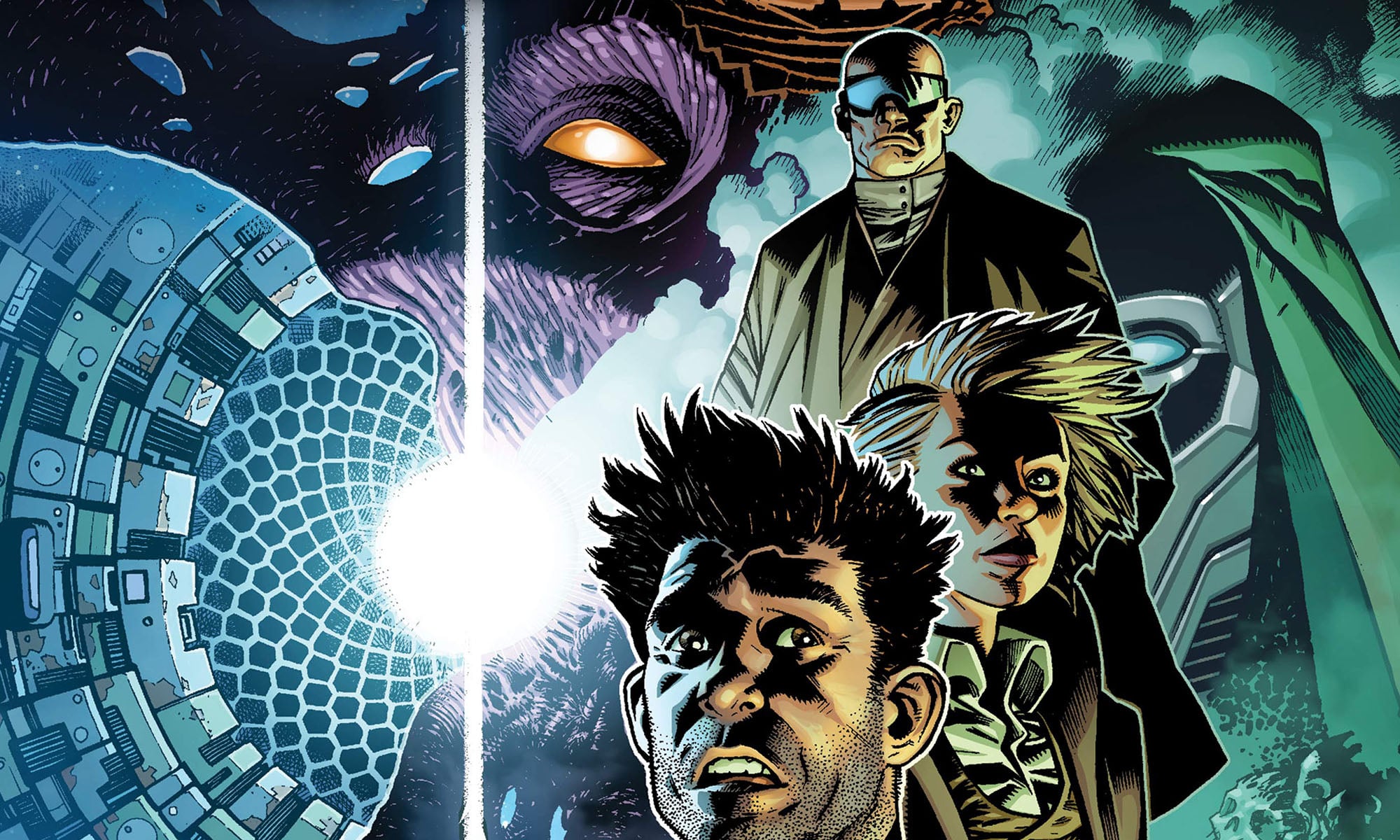
Marvel’s Fantastic Four are usually associated with discovery, family adventure and the bright, forward-looking side of superhero storytelling. Midnight Fantastic Four is expected to turn that familiar image inside out. The project will give Marvel’s First Family a Lovecraftian-style reimagining, bringing elements of body horror and cosmic unease into a concept that is more commonly presented as an optimistic science-fiction adventure.
Writer Benjamin Percy has described himself as the wrong person to write a conventional Fantastic Four story, while suggesting that he may be exactly the right person for this darker variation. That distinction is at the heart of the project. Rather than approaching the team as a straightforward superhero unit, Midnight Fantastic Four is positioned as an opportunity to explore what happens when the characters and their world are viewed through the lens of fear, transformation and the unknown.
The phrase “Lovecraftian-style” carries a particular meaning for audiences. It generally suggests horror built around overwhelming forces, incomprehensible mysteries and the unsettling possibility that humanity does not fully understand the universe around it. That approach can make familiar powers feel strange again. A character who can stretch, change shape, or manipulate energy may be impressive in a traditional superhero story, but those same abilities can become disturbing when the focus shifts toward altered bodies and the loss of control.


That is where body horror becomes especially important to Midnight Fantastic Four. Body horror is not simply violence or a frightening appearance. It is horror centered on the body becoming unfamiliar, vulnerable or transformed. It can create fear by challenging a person’s sense of identity and by turning something intimate—the physical self—into a source of uncertainty. Applied to the Fantastic Four, that idea has obvious potential, because the team’s abilities are closely tied to their bodies.
The project’s premise therefore appears designed to question the reassuring logic of superhero powers. In a conventional adventure, a transformation is often a tool: it helps a hero overcome a threat or solve a problem. In a body-horror story, transformation can instead raise troubling questions. Is the changed body still under its owner’s control? Does power remain a gift when it becomes painful or unpredictable? How much can someone change before they begin to wonder whether they are still the same person?
Those questions do not require the characters to stop being recognizable. In fact, the contrast between their familiar identities and the darker tone may be the most compelling feature of the comic. Readers know the basic image of the Fantastic Four as a group bound together by extraordinary circumstances and a strong family connection. A horror reinterpretation can preserve that foundation while placing it under pressure.

Family is particularly useful in a horror setting because it creates emotional stakes beyond survival. Fear becomes more complicated when a character is not only trying to protect themselves but also watching someone they love change in front of them. Trust, responsibility and loyalty can all become sources of tension. A family may remain united during a crisis, yet unity does not necessarily make the crisis less frightening. Sometimes it makes the danger more personal.
Midnight Fantastic Four can also draw its tension from the difference between scientific curiosity and genuine safety. The Fantastic Four have long been associated with exploration and the pursuit of knowledge. A Lovecraftian framework tends to challenge the idea that every mystery should be solved or that every discovery will benefit those who make it. The unknown is not merely a puzzle waiting for an answer; it can be a force that changes the people who encounter it.
That does not mean the comic needs to reject the team’s scientific identity. Instead, it can make science part of the unease. Observation, experimentation and discovery may still drive the story, but the results could feel less reassuring. Knowledge might reveal danger rather than eliminate it. A discovery could create new questions instead of providing a clean explanation. The horror would then emerge not from ignorance alone, but from learning enough to understand how little control the characters truly possess.



Percy’s comments about being the wrong person for a standard Fantastic Four book are revealing because they acknowledge the challenge of matching a writer to a property. The conventional version of the team has a distinct tone, and not every writer would approach it in the same way. Percy’s apparent confidence in the darker project suggests that Midnight Fantastic Four is not being treated as a routine extension of the mainline concept. Its value lies in giving the writer room to emphasize the unsettling qualities already present in the idea of superhuman transformation.
That creative choice could help the comic stand apart from other Fantastic Four stories without requiring readers to forget what makes the team recognizable. Reimaginings work best when they alter the atmosphere while preserving a meaningful connection to the source. The audience should be able to see why this is still a Fantastic Four story, even as the familiar elements are made more disturbing.
The body-horror angle may also allow the comic to explore power in a more uncomfortable way. Superhero stories often present abilities as symbols of agency. A hero’s power can represent confidence, purpose or the ability to protect others. Body horror complicates that symbolism by emphasizing the physical cost of being different. It asks whether power can be separated from pain, and whether extraordinary abilities are still empowering when they make the body a constant reminder of vulnerability.


:max_bytes(150000):strip_icc()/lioness-092126-2-d63842236f1a4df5a12feca54e4ee019.jpg)
For general readers, the appeal of Midnight Fantastic Four may be found in that combination of recognition and disorientation. Someone familiar with the team can approach the book with an understanding of its basic identity, while someone less invested in superhero continuity can encounter it as a standalone horror reinterpretation. The Lovecraftian framing signals that the story is interested in mood and psychological discomfort as much as traditional action.
It is also worth distinguishing the project’s horror from the idea of simply making the characters darker. A darker color palette or more serious dialogue would not automatically create a horror story. The reported emphasis on body horror points toward something more specific: the fear of physical change, the instability of identity and the possibility that the body itself may become a threat. That makes the concept more than a grim version of a familiar adventure. It suggests a story built around discomfort at a fundamental level.
The Fantastic Four’s powers are well suited to that kind of treatment because they can be understood in both spectacular and unsettling ways. A body that stretches can look liberating in one context and unnatural in another. A body that becomes harder or more flame-like can represent strength, yet also suggest that ordinary human boundaries have been abandoned. When a story shifts its attention from what these powers allow to what they might do to a person’s sense of self, the same abilities can carry a very different emotional charge.


Midnight Fantastic Four’s concept may therefore appeal to readers who enjoy superhero comics but want to see familiar characters tested by genres outside the usual adventure format. Superhero fiction has always borrowed from science fiction, fantasy, crime stories and horror. This project appears to place horror at the center rather than using it as a brief detour. The result could be a more intimate and unsettling examination of the team’s extraordinary nature.
The word “midnight” also communicates the project’s intended atmosphere without requiring a detailed explanation of its plot. It suggests a version of the Fantastic Four seen after the lights go out, when certainty has weakened and the world feels less stable. That title works as a signal to readers that they should not expect the same emotional experience as a conventional Fantastic Four adventure. The darkness is not merely decorative; it is part of the story’s identity.
At the same time, the project’s horror will depend on maintaining an emotional connection to the characters. Strange imagery and unsettling transformations can create an immediate reaction, but lasting horror usually comes from caring about what might be lost. The more recognizable the team’s relationships remain, the more powerfully a threat to their bodies or identities can affect the reader. A frightening reimagining still needs a human center.


That balance may be the central creative challenge for Percy. If the story leans too far toward abstraction, the Fantastic Four could become symbols inside a horror experiment rather than characters with whom readers can connect. If it stays too close to familiar superhero rhythms, the body-horror premise may lose its impact. The most effective version of Midnight Fantastic Four would likely use the team’s established identity as the foundation for its strangest ideas.
Percy’s self-description as the wrong writer for the standard version may ultimately function as a statement of intent. He is not presenting Midnight Fantastic Four as an ordinary assignment viewed through a gloomy filter. He is identifying the project as a place where his instincts—particularly an interest in disturbing physicality and horror—can work with the property instead of against it. In that sense, being “wrong” for one version of the team can mean being unusually well suited to another.
Marvel has not needed to abandon the Fantastic Four’s familiar appeal in order to explore a concept like this. A reimagining can exist alongside the brighter, more traditional understanding of the characters. That separation gives Midnight Fantastic Four permission to take risks. Readers can enter it expecting a deliberately altered experience, one that treats the team’s powers and relationships as material for fear rather than uncomplicated wonder.


What is currently clear is the direction: a Lovecraftian-style Fantastic Four story, a strong body-horror component and a writer who believes his sensibilities are better suited to this unusual interpretation than to a conventional take on Marvel’s First Family. The exact shape of the story will determine how successfully those elements work together, but the premise already offers a sharp change in perspective.
Instead of asking only what the Fantastic Four can do, Midnight Fantastic Four appears ready to ask what their powers mean when viewed from the darkest possible angle. Can transformation remain heroic when it becomes frightening? Can a family stay united when its members no longer recognize what they are becoming? And can the search for knowledge be worth the danger of what might be discovered? Those questions place the project firmly in horror territory while keeping it connected to the ideas that make the Fantastic Four enduring characters.
For readers looking for a familiar Marvel concept with an unfamiliar pulse, that is the promise of Midnight Fantastic Four. It is not simply the Fantastic Four at night. It is an attempt to make the team’s extraordinary nature feel strange again—and to use fear, physical transformation and cosmic uncertainty to reveal a side of Marvel’s First Family that conventional superhero storytelling rarely puts first.


