5 TV Shows To Watch If You Like the Dungeon Crawler Carl Books
While fans wait for the Peacock adaptation of Dungeon Crawler Carl, these five series offer a mix of deadly games, strange worlds, escalating challenges and fantasy-driven adventure.
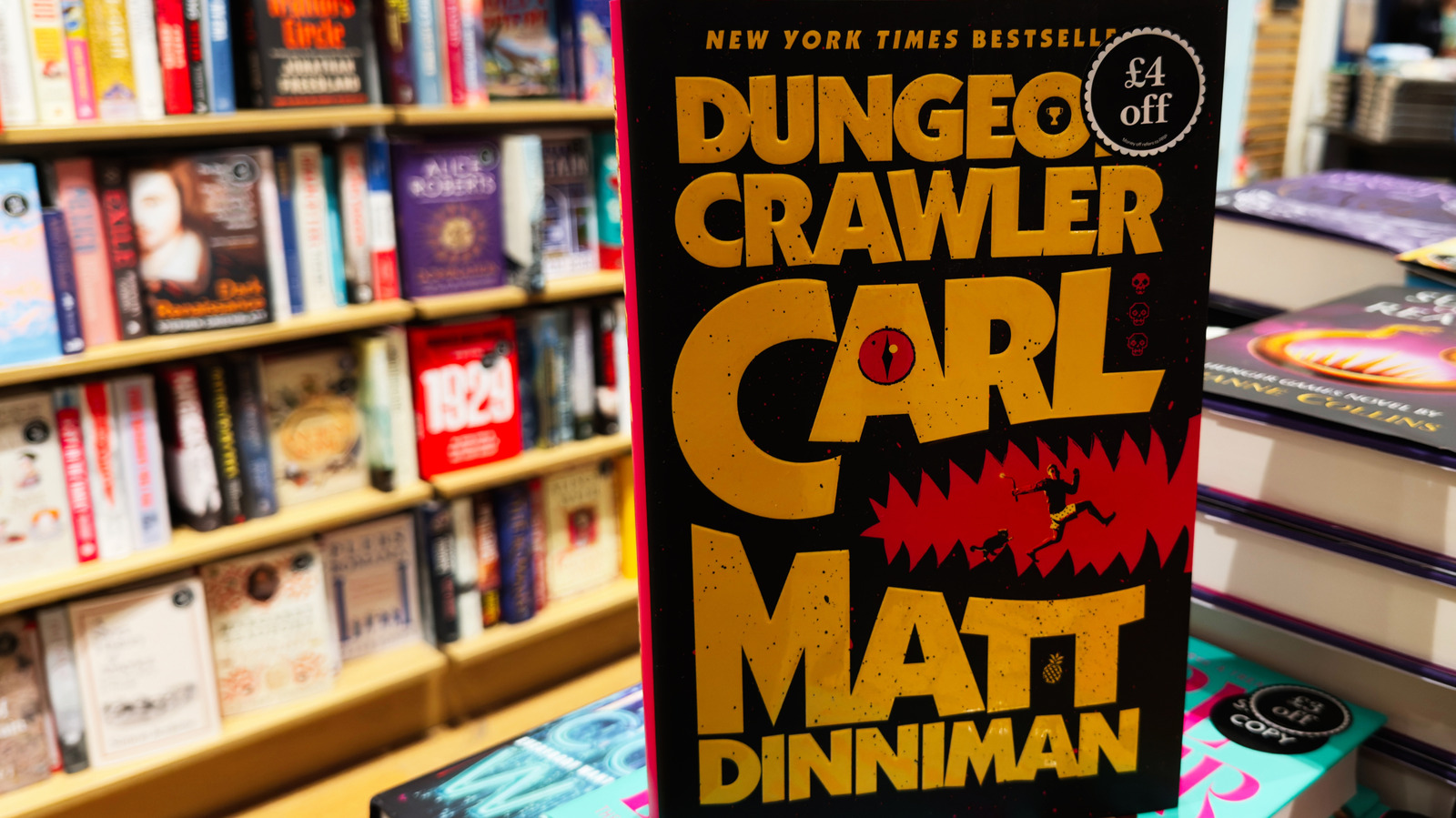
Waiting for a television adaptation of a beloved book series can feel like its own kind of endurance test. That is especially true for fans of Dungeon Crawler Carl, the wildly inventive LitRPG saga that combines dungeon exploration, game-like progression, dark comedy and remarkably high emotional stakes. The books have built a devoted following by turning a familiar fantasy setup into something much stranger, louder and more unpredictable.
The Peacock adaptation gives readers a reason to keep looking toward the screen, but it may be some time before the series arrives and begins translating that world into television. In the meantime, several existing shows can satisfy different parts of the same craving. Some focus on contestants forced through brutal challenges. Others build entire stories around dangerous alternate realities, supernatural power systems or the pleasures of exploring a dungeon.
No single series replicates the exact experience of Dungeon Crawler Carl. The books work because their ingredients are unusually difficult to combine: absurd humor sits beside genuine horror, game mechanics shape the action, and the characters’ survival depends as much on improvisation as on strength. Still, the following five shows share enough of that spirit to make them worthwhile viewing while fans wait for the Peacock adaptation.



Squid Game is the most obvious recommendation for viewers drawn to the survival-game side of Dungeon Crawler Carl. Its premise places desperate people inside a competition built around familiar activities, then transforms those activities into life-or-death tests. The contrast between innocent-looking games and devastating consequences creates much of the series’ tension.
That contrast should feel familiar to readers of the books. One of the pleasures of a dungeon-crawling story is watching ordinary ideas become threatening when the rules change. A room, a reward, a challenge or even a seemingly helpful instruction can take on a dangerous new meaning. Squid Game uses a similar tension, constantly asking its characters to decide how far they will go when survival is placed above comfort, morality and trust.
The series also understands the value of spectacle. Its environments are visually distinctive, and its challenges are designed to be easy for the audience to understand even when the choices facing the contestants become increasingly complicated. That clarity is important in any story built around rules. Viewers need to know what is happening so they can concentrate on the characters’ decisions, alliances and desperate attempts to find an advantage.


For Dungeon Crawler Carl fans, the appeal is not simply the presence of danger. It is the way a structured competition can expose personality. Under pressure, people reveal what they fear, what they value and what they are willing to sacrifice. That emphasis on character makes Squid Game a strong companion watch, even though its tone is more grounded and less fantastical than the books.
Alice in Borderland moves closer to the combination of strange world-building and game-based survival that makes Dungeon Crawler Carl so compelling. The series follows characters who find themselves in an unfamiliar version of reality, where survival depends on participating in dangerous games. Every challenge carries its own rules, and understanding those rules is often as important as physical courage.
That focus on problem-solving gives the show a particularly strong connection to the dungeon-crawler mindset. Characters cannot rely on a single skill forever. They must observe their surroundings, identify patterns, assess other players and make decisions before they have complete information. The result is a story in which intelligence and adaptability matter just as much as force.



The unusual setting also creates the sense that the characters have entered a system larger than themselves. They are not simply trying to escape one immediate threat. They are trying to understand the world that has trapped them. That gradual process of discovery is one of the most satisfying elements of a good fantasy adventure, and it is central to the appeal of Alice in Borderland.
Like Dungeon Crawler Carl, the series balances immediate survival with larger questions. What are the games for? Who created them? Is there a route back to ordinary life? Those questions give the action a forward pull, ensuring that the story is about more than clearing one challenge after another.
Viewers should also expect a darker overall mood. Alice in Borderland is suspenseful and often bleak, while Dungeon Crawler Carl uses comedy to puncture its grim situations. Even so, the two stories share an appreciation for escalating rules, unexpected obstacles and protagonists who must become more resourceful with every new trial.


Solo Leveling offers a different route into the same general territory. Rather than centering its story on a group of contestants trapped in a competition, it focuses on a protagonist whose growth is tied to a game-like structure. Progression, new abilities and increasingly dangerous encounters drive the experience, giving the series the familiar rhythm of a role-playing game brought to life.
That makes it an especially natural recommendation for readers who enjoy the LitRPG elements of Dungeon Crawler Carl. The pleasure of LitRPG storytelling often comes from seeing advancement made visible. A character does not merely become more capable in an abstract sense; the story gives the audience a framework for understanding that change. Each new challenge can test a recently gained ability, expose a weakness or open the door to another level of danger.
Solo Leveling leans into that momentum. Its appeal comes from watching a character move through a world of threats while gradually changing his place within it. Encounters are not isolated set pieces. They contribute to a larger sense of development, encouraging viewers to wonder what the next threshold will look like and what kind of enemy could challenge the protagonist after the latest victory.


Fans of Dungeon Crawler Carl may also appreciate the emphasis on systems. The rules behind a fantasy world can be as entertaining as the monsters within it, particularly when characters learn to exploit those rules in unexpected ways. The most satisfying victories often arrive not because someone is simply stronger, but because they understand the structure of the challenge better than their opponent.
The tone is not identical to the books, and viewers should not expect the same blend of comedy and emotional chaos. Solo Leveling is more focused on power, progression and high-impact action. Nevertheless, it captures the addictive feeling of entering one dangerous encounter after another and wondering how far the central character can go.
The 8 Show is another worthwhile choice for fans interested in the social pressure surrounding a deadly competition. Its setup places people in a controlled environment where time, money and personal behavior become part of a larger contest. The series is less concerned with fantasy adventure than with the ways people behave when an artificial system encourages them to compete.


That focus gives the show a connection to one of the richest ideas in Dungeon Crawler Carl: survival is never only about defeating an obstacle. It is also about navigating a structure designed by someone else. The contestants must understand the rules, anticipate how others will react and decide when cooperation is more valuable than individual advantage.
The 8 Show can be uncomfortable viewing because its tension comes from human behavior as much as from external danger. The environment becomes a pressure cooker, and the audience is invited to consider how quickly fairness can collapse when rewards and punishments are arranged to encourage conflict. For fans who enjoy the satirical edge of Dungeon Crawler Carl, that examination of systems and spectatorship may be particularly appealing.
The two stories approach their ideas in very different ways. The 8 Show is a contained, unsettling drama, while the books are expansive, fantastical and deliberately eccentric. Yet both understand that a game becomes interesting when the people inside it find ways to challenge the intended design. The best participants are not necessarily the strongest. They are the ones who notice possibilities the system’s creators may have overlooked.

Delicious in Dungeon rounds out the recommendations by approaching dungeon fantasy from a warmer, more playful direction. The series turns the act of exploring a dungeon into an opportunity for discovery, problem-solving and imaginative world-building. It is deeply interested in what exists inside a fantasy dungeon, not only as an obstacle but as an ecosystem with its own logic.
That perspective makes it a good companion for viewers who enjoy the exploratory side of Dungeon Crawler Carl. Dungeons are often treated as a series of rooms containing enemies and rewards. Delicious in Dungeon asks viewers to look more closely at the setting itself. What lives there? How does it survive? What resources can be found? How might an adventuring party use its surroundings instead of simply fighting through them?
The food-centered premise gives the series a distinctive sense of humor, but its appeal goes beyond the novelty of cooking in a dangerous environment. The show understands that a fantasy world feels richer when its characters have practical concerns. They need to eat, travel, recover and make decisions with limited resources. Those details make the adventure feel lived-in rather than purely decorative.



For fans of Dungeon Crawler Carl, the series can provide a welcome change of pace. It contains danger and suspense, but it is more interested in curiosity, companionship and the everyday oddities of life in a fantasy world. That balance makes it an appealing choice for viewers who want dungeon exploration without spending every episode in a state of unrelenting dread.
Taken together, these five shows reveal why Dungeon Crawler Carl has such a distinctive appeal. Squid Game offers the brutal structure of a survival contest. Alice in Borderland supplies mysterious world-building and rule-driven challenges. Solo Leveling captures the excitement of visible progression. The 8 Show examines the social pressures created by an artificial system, while Delicious in Dungeon celebrates the curiosity and practical creativity of fantasy exploration.
None of them can replace the experience of reading the books, and none should be expected to reproduce every element of the coming Peacock adaptation. They do, however, offer different ways to revisit the ideas that make dungeon stories so addictive: entering an unfamiliar world, learning its rules, finding an advantage and continuing forward even when the next challenge looks impossible.



Until the television version of Dungeon Crawler Carl is ready, that is more than enough reason to start a new viewing marathon. Whether the priority is lethal competition, supernatural progression, unsettling social satire or imaginative dungeon life, these series provide a strong collection of detours for fans waiting to see the books make their way to the screen.