Why Hitchcock’s ‘North by Northwest’ Still Makes Appearances Feel Dangerous
Alfred Hitchcock’s ‘North by Northwest’ comes to Ron Robinson Theater Tuesday, offering audiences a sharp, suspenseful look at mistaken identity, visual deception and the uneasy gap between what seems true and what is true.
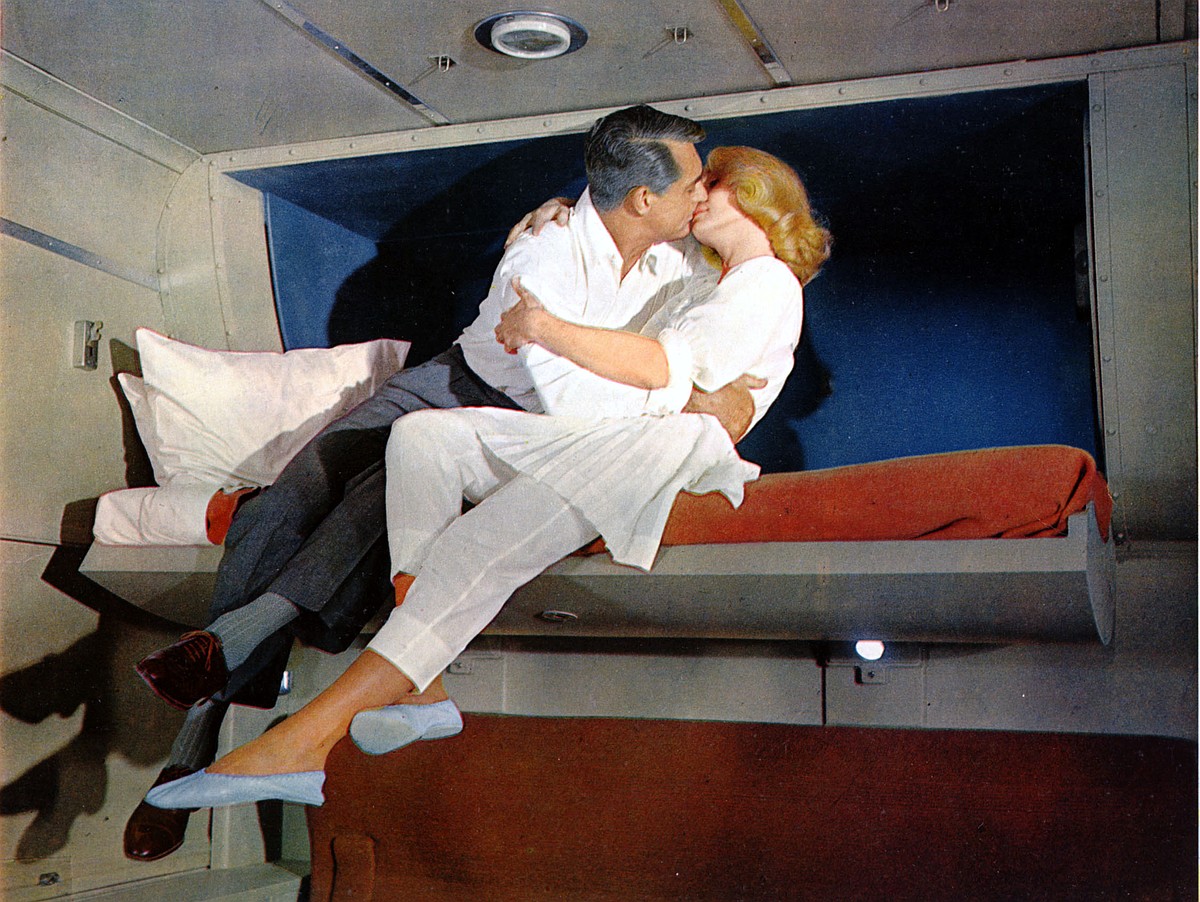
Alfred Hitchcock’s “North by Northwest” arrives at Ron Robinson Theater Tuesday, bringing with it a question that has shaped much of the director’s work: How much can people trust what they see?
That question gives the film more than a suspenseful premise. It gives the movie its unsettled personality. In Hitchcock’s hands, appearances are never merely decorative. A face, a place, a gesture or a confident explanation can suddenly become evidence of something else. The familiar can turn threatening without warning, and certainty can vanish before anyone has time to understand why.
“North by Northwest” is built around that dangerous instability. Its tension comes not only from whatever may happen next, but from the difficulty of knowing what is happening now. The film asks viewers to remain alert while also reminding them that alertness may not be enough. People can be observant and still be misled. They can study the evidence and still reach the wrong conclusion.



That is one reason the film remains so inviting on a theater screen. Hitchcock’s ideas about appearances are not confined to dialogue or explanation. They are carried by images, arrangements and changes in perspective. The audience is encouraged to look closely, but it is also encouraged to question the act of looking itself.
A movie built around uncertainty can easily become confusing, yet Hitchcock’s approach is more controlled than chaotic. He understands that suspense depends on giving viewers enough information to form expectations. Once those expectations are in place, the film can disturb them. The pleasure comes from feeling that the story is just within reach, then discovering that its shape has shifted.
This movement between recognition and doubt is central to the experience of “North by Northwest.” The film does not simply hide information from its audience. Instead, it plays with the meaning of information. A detail may be visible without being understood. An impression may feel persuasive without being reliable. A situation may appear straightforward until another possibility comes into view.



Hitchcock spent his career exploring how eagerly audiences believe what they see. That eagerness is not presented as a foolish weakness belonging only to characters on screen. It belongs to viewers, too. Anyone watching a film naturally searches for signals, patterns and explanations. Hitchcock turns that natural habit into a source of suspense.
There is a special kind of uneasiness in realizing that the eyes may be working perfectly while the mind is interpreting them incorrectly. “North by Northwest” draws power from that uneasiness. It makes the audience aware of how quickly a visual impression can become a judgment, and how quickly a judgment can become a mistake.
The film’s title also suggests movement, direction and uncertainty. It sounds precise, but precision can be deceptive. A direction appears to offer clarity; it tells us where to look or where to go. Yet the experience represented by the film is one in which the route toward understanding remains unstable. The closer one seems to get to an answer, the more necessary it becomes to ask whether the answer is trustworthy.


That tension gives the movie a distinctive balance. It is suspenseful, but it is not only grim. Hitchcock recognizes that confusion can create a form of energy. When people do not know what role they are expected to play, their attempts to regain control can become anxious, surprising and even funny. The uncertainty does not erase the entertainment. It fuels it.
For a general audience, the film offers a useful reminder that suspense does not require constant explanation. Sometimes the most effective way to build tension is to let a question remain open. Who is being believed? Which version of events has gained authority? What does a person know, and what does that person merely assume? Those questions can keep a scene alive even when very little is said.
That attention to perception is also what makes the movie rewarding to revisit. On a first viewing, the desire to know what happens next can dominate. On a later viewing, the focus may shift toward how the film creates its uncertainty. Small choices in presentation become more noticeable. The audience can observe the process by which an ordinary-looking moment begins to feel suspicious.



Watching the film with others adds another layer to that process. In a theater, viewers share the same images and the same sudden turns, but they do not necessarily interpret them in the same way. One person may notice a warning sign while another remains persuaded by the surface appearance. The communal setting turns private uncertainty into a shared experience.
That makes the Ron Robinson Theater screening an opportunity to encounter “North by Northwest” as more than a familiar title. A theater gives the film room to establish its visual logic. It allows the audience to settle into the movie’s rhythm, to follow its shifts in mood and to feel the difference between confidence and doubt at full scale.
The setting matters because Hitchcock’s suspense depends on attention. The film asks viewers to watch not only for overt danger but also for changes in context. The meaning of an image may depend on what came before it or what follows it. A setting may seem safe until the surrounding circumstances alter its meaning. A person may appear trustworthy until the film rearranges the audience’s understanding.

In that sense, “North by Northwest” remains connected to everyday life. People make decisions based on surfaces all the time. They infer motives from expressions, trust information because it is presented confidently and assume that familiar surroundings are stable. Most of the time, such judgments go unchallenged. Hitchcock imagines what happens when those habits of trust become unreliable.
The result is not simply a warning against appearances. Appearances are necessary; they are how people begin to understand the world. The film’s deeper concern is the gap between seeing something and knowing what it means. That gap can be narrow, but it can also become vast. Suspense grows in the space between the two.
Hitchcock’s achievement is to make that abstract idea immediate. Viewers do not have to be given a lecture about perception. They feel the instability as the story develops. The film makes uncertainty physical and emotional. It places the audience in the uncomfortable position of wanting an explanation while recognizing that the available explanations may be incomplete.


That discomfort is part of the movie’s enduring appeal. A less confident work might treat confusion as a temporary obstacle, something to clear away as quickly as possible. “North by Northwest” understands that confusion can be the subject itself. It explores the fear of being misunderstood, the danger of misunderstanding others and the vulnerability that comes with losing control over how one is seen.
The film’s central idea can also be read as a meditation on identity. If appearances are unstable, then identity becomes unstable with them. A person may be judged according to an image, a claim or a role imposed from outside. The struggle is not only to escape danger but to establish what is real when other people have already decided what they think they see.
That concern remains recognizable because modern life has not made people less dependent on appearances. If anything, the number of images competing for attention has increased. People are constantly asked to evaluate what looks convincing, what seems authoritative and what can be trusted. Hitchcock’s film offers no simple solution, but it dramatizes the problem with unusual clarity.

For viewers attending Tuesday’s screening, the most useful preparation may be to resist the urge to solve everything immediately. “North by Northwest” works best when its uncertainty is allowed to breathe. Rather than treating every moment as a puzzle that must be answered at once, audiences can notice how the film guides their expectations and then unsettles them.
It is also worth paying attention to the relationship between the audience and the screen. Hitchcock’s characteristic challenge is not merely to ask whether a character is right. It is to ask whether the viewer has been persuaded for the same reason. When a visual impression feels obvious, why does it feel obvious? When a conclusion seems unavoidable, what made it seem that way?
Those questions make the movie especially suitable for a repertory-style theater presentation. A screening can preserve the pleasure of suspense while opening the door to conversation afterward. Viewers may disagree about which moments felt most deceptive or which appearances carried the greatest danger. That disagreement is fitting for a film so interested in the instability of certainty.


“North by Northwest” does not depend on the belief that everything visible is false. Its power comes from something subtler: the understanding that the visible world can be accurate and still be misunderstood. A person can see clearly and interpret badly. A scene can reveal information while concealing its significance. The truth may be present without being recognized.
That is why the film continues to feel alive rather than merely preserved. Its suspense is rooted in a human reflex that has not changed. People want stories to make sense. They want appearances to align with reality. They want a reliable explanation for what they have witnessed. Hitchcock knows how satisfying that desire can be—and how dramatically it can be disrupted.
The Tuesday screening at Ron Robinson Theater offers audiences a chance to experience that disruption together. Whether encountered as a suspense story, a study of mistaken impressions or a meditation on the hazards of trusting the visible, “North by Northwest” remains a film that rewards close attention.


Its most lasting warning is also its most compelling invitation: look carefully, but do not assume that looking is the same as knowing.